On October 23, 2026, Block’s in‑house AI lab unveiled Dessa, which it describes as a full‑duplex speech‑to‑speech model trained from scratch on human conversation that can listen and speak simultaneously and runs locally on a MacBook Pro M4 Max or better; Block released demo recordings, opened a public waitlist, and offered early access to a small group of AI safety researchers.
Moonshot AI announced Kimi K3.1 Pro (and a Highspeed variant) as the first model in its K3.1 series on October 24, 2026, describing the flagship as a 3T-class open-weight model with a 1,048,576-token context window, availability across Kimi apps and APIs, benchmark results the company says top some competitors on select tasks, and a full-weight release scheduled for November 4, 2026.
Moonshot AI positioned K3.1 Pro as its most capable 3T-class open-weight model, pairing it with a Highspeed variant claimed to run two to three times faster; the company published internal benchmark scores (Terminal‑Bench 4.0, BenchCAD, OfficeQA Pro v2 and others) and said it removed cyber-related data from training to lower vulnerability capabilities, while scheduling full weight publication by November 4, 2026.
Denise Muyco, Co‑Founder and CEO of RAVEL, frames the company as an orchestration layer that coordinates compute, networking, storage, security and policy across distributed AI environments to improve utilization and respect sovereignty constraints (claims drawn from RAVEL’s product descriptions and Muyco’s interview).
Denise Muyco, Co‑Founder and CEO of RAVEL, frames the company as an orchestration layer that coordinates compute, networking, storage, security and policy across distributed AI environments to improve utilization and respect sovereignty constraints (claims drawn from RAVEL’s product descriptions and Muyco’s interview). Muyco links RAVEL’s approach to her prior work building a shared high‑performance compute consortium for roughly 30 Vancouver studios, and she argues that federation plus intelligent orchestration unlocks usable capacity more effectively than simply adding GPUs (claims supported by her descriptions of past projects and infrastructure inefficiencies).
RENÉ 26, the second Rencontres Européennes des Nouvelles Écritures founded in 2025 by Jean Boillot and his company La Spirale, will take place in Metz on 26 and 27 October and foregrounds theatrical writing as a way to explore telepresence, distributed performance and the integration of conversational AI and chatbots as stage agents.
RENÉ 26, the second Rencontres Européennes des Nouvelles Écritures founded in 2025 by Jean Boillot and his company La Spirale, will take place in Metz on 26 and 27 October and foregrounds theatrical writing as a way to explore telepresence, distributed performance and the integration of conversational AI and chatbots as stage agents.
The PP published an AI-generated video that portrays several current and former PSOE figures and the prime minister's wife making fictitious confessions of corruption; the PSOE says it is studying legal action while the PP defends using AI and accuses the PSOE of "judicializing politics."
The PP published an AI-generated video that portrays several current and former PSOE figures and the prime minister's wife making fictitious confessions of corruption; the PSOE says it is studying legal action while the PP defends using AI and accuses the PSOE of "judicializing politics."
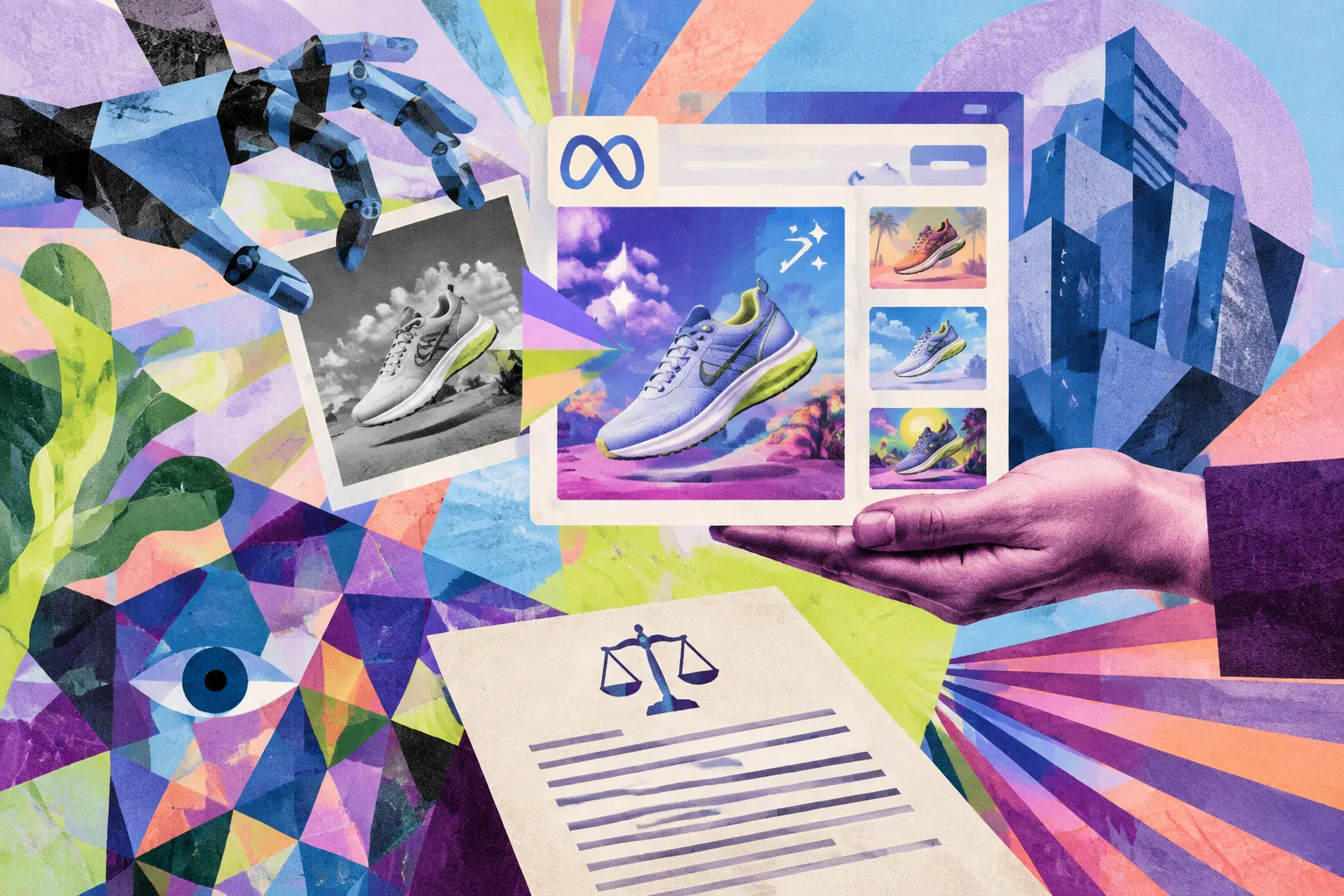
Adweek reports that Meta’s ad platform has been applying generative-AI edits to advertisers’ creative without clear opt-in, and that Meta’s updated Commercial Terms, effective Oct.
Adweek reports that Meta’s ad platform has been applying generative-AI edits to advertisers’ creative without clear opt-in, and that Meta’s updated Commercial Terms, effective Oct. 30, place legal responsibility for AI-generated or AI-altered ad output on advertisers.
Discovery is shifting from traditional search to AI systems that synthesize answers before users reach websites, prompting the rise of Generative Engine Optimization (GEO) and a need for organizational redesign to manage AI visibility across marketing, data, technology, content and communications.
Discovery is shifting from traditional search to AI systems that synthesize answers before users reach websites, prompting the rise of Generative Engine Optimization (GEO) and a need for organizational redesign to manage AI visibility across marketing, data, technology, content and communications. Industry data show rapid effects: an IAB update reports 44% of U.S. ad buyers named adapting to changing consumer behavior as a top challenge and 76% are increasing focus on AI-optimized content; publishers and analytics firms report large declines in traditional traffic and surging AI-referred visits (46% decline in Google traffic for Reach; 693.4% AI referral growth for U.S. retail in 2025’s holiday season). GEO requires technical accessibility, consistent authoritative content, structured data and third‑party signals — and a single accountable leader coordinating cross‑team responses and measurement because AI answers are fluid and influenced by many sources.
Adobe’s Enhance Audio, included in the Premiere beta, splits a clip into speech, music, ambience, sound effects and reverb so editors can rebalance elements and keep cutting without blocking renders; a local model (V1) runs on the user’s machine while a higher-quality cloud model (V2) uses Firefly and charges two generative credits per minute, and Premiere processes five seconds of handles on each side of clips to reduce reprocessing.
Adobe’s Enhance Audio, included in the Premiere beta, splits a clip into speech, music, ambience, sound effects and reverb so editors can rebalance elements and keep cutting without blocking renders; a local model (V1) runs on the user’s machine while a higher-quality cloud model (V2) uses Firefly and charges two generative credits per minute, and Premiere processes five seconds of handles on each side of clips to reduce reprocessing.
A 2026 benchmark called ViTeX-Bench evaluates scene-text replacement in video using 387 source videos (230 training, 157 evaluation) and separates correctness, visual and temporal quality, and edit locality; reviewers must inspect playback and preserve agreed editable boundaries rather than infer them from a tool’s output.
A 2026 benchmark called ViTeX-Bench evaluates scene-text replacement in video using 387 source videos (230 training, 157 evaluation) and separates correctness, visual and temporal quality, and edit locality; reviewers must inspect playback and preserve agreed editable boundaries rather than infer them from a tool’s output.
Unite.AI’s guide defines Diffusion Transformers as diffusion‑style generative systems that embed transformer backbones to model noisy image, video, or latent tokens, and presents a five‑stage operating map (1: encode → 2: add noise → 3: condition → 4: predict → 5: decode) to separate the model mechanism from deployment choices and risks (notably attention cost and sampling steps making high‑resolution generation expensive).
Unite.AI’s guide defines Diffusion Transformers as diffusion‑style generative systems that embed transformer backbones to model noisy image, video, or latent tokens, and presents a five‑stage operating map (1: encode → 2: add noise → 3: condition → 4: predict → 5: decode) to separate the model mechanism from deployment choices and risks (notably attention cost and sampling steps making high‑resolution generation expensive).
Hugging Face and academic partners published an open model called Carbon‑X that was trained on DNA sequences plus natural language so users can query small stretches of genomes in conversational English; the team designed the model to run on local hardware (14 billion parameters) and says it has not been validated with wet‑lab experiments.
Carbon‑X is an open model from Hugging Face, developed with Zhongguancun Academy and the University of Naples Federico II, trained on about 300 billion tokens combining DNA from many species and English text; it accepts roughly 50,000‑base‑pair inputs, uses a 14 billion‑parameter architecture intended to run locally, and its creators caution that lab validation of its predictions is pending.
BytePreview reports that the label “AI” on headphones in 2026 covers distinct functions — translation, sound processing (including noise cancellation) and sensors that read physiological signals — and that the practical differences depend on what the headset does locally versus what requires a phone or cloud service (claims from BytePreview and supporting sources).
BytePreview reports that the label “AI” on headphones in 2026 covers distinct functions — translation, sound processing (including noise cancellation) and sensors that read physiological signals — and that the practical differences depend on what the headset does locally versus what requires a phone or cloud service (claims from BytePreview and supporting sources). Specific cited items include a LiveLingo reference to translation latency of one to five seconds, a La Razón report of a December 2025 firmware leak about a Galaxy Buds gesture, an El Confidencial note attributing a 25% noise-cancellation improvement to Sony, and Infobae coverage of CES 2026 headsets with brain-signal sensors — but the article stresses these are not independent confirmations of widespread availability or clinical validation.
EL ESPAÑOL presented the exhibition 'AutorIA. La Rioja, tierra del español' in Madrid as an immersive show that traces 11 centuries from the Códice 60 and San Millán de la Cogolla to contemporary programming and language models, and it displays heritage objects such as the ivory cross of San Millán, Bárbara de Braganza’s harpsichord and the recovered Virgen de la Manzana.
A poster for the National Gallery of Victoria’s triennial reproduces an image from Ayoung Kim’s multi-channel video Delivery Dancer’s Arc: Inverse (2024), a work created using generative AI alongside CGI, game engines and live action; Reddit commenters disparaged the poster for using AI without distinguishing artists who use AI from AI replacing artists.
A poster for the National Gallery of Victoria’s triennial reproduces an image from Ayoung Kim’s multi-channel video Delivery Dancer’s Arc: Inverse (2024), a work created using generative AI alongside CGI, game engines and live action; Reddit commenters disparaged the poster for using AI without distinguishing artists who use AI from AI replacing artists. The Conversation’s author Sara Oscar frames a broader paradox: generative AI both saturates visual culture with what she calls “AI slop” and offers an experimental site where artists can reveal the technology’s limits and impacts on labour and seeing.
Ellia Lebleu, a founding member of the WikiProject AI Cleanup, says volunteers launched the effort in 2023 after noticing AI-written articles; by 2025 AI text patterns had grown subtler and volunteers are combining human review with detection tools and source-verification AIs to remove problematic machine-generated content.
Ellia Lebleu, a founding member of the WikiProject AI Cleanup, says volunteers launched the effort in 2023 after noticing AI-written articles; by 2025 AI text patterns had grown subtler and volunteers are combining human review with detection tools and source-verification AIs to remove problematic machine-generated content. Lebleu says she worked with detection firm Pangram, which flagged about 20 percent of new articles and drafts as AI-generated in late 2025 and about 15 to 16 percent in early 2026; she characterizes those figures as a conservative lower bound.
Spotify says it updated its recommendation system to reduce low-quality or spam music—much of it linked to AI—and to increase visibility for authentic artists; the company reports removing more than 75 million spam tracks from the platform and has already excluded over 50 million tracks from recommendations this year while keeping them hosted.
Spotify says it updated its recommendation system to reduce low-quality or spam music—much of it linked to AI—and to increase visibility for authentic artists; the company reports removing more than 75 million spam tracks from the platform and has already excluded over 50 million tracks from recommendations this year while keeping them hosted.
A recent INMA webinar discussed research showing Americans spend nearly as much time on e-mail as on social media and warned that AI features in Gmail, Yahoo and Microsoft inboxes are beginning to filter and summarise messages, forcing newsletters to earn attention through depth, personality, clear purpose and personalization.
A recent INMA webinar discussed research showing Americans spend nearly as much time on e-mail as on social media and warned that AI features in Gmail, Yahoo and Microsoft inboxes are beginning to filter and summarise messages, forcing newsletters to earn attention through depth, personality, clear purpose and personalization.
Google has started rolling out the Gemini "Personal Intelligence" feature to Android Auto, saying the update will let the car assistant draw on a user's Google apps to answer context-sensitive questions — for example, flight gate or status — and to offer route-aware recommendations. The feature remains optional and users can control which apps Gemini can access; availability excludes several territories at launch.
Engadget reports that Google began rolling out Gemini Personal Intelligence to Android Auto users, saying the update will let the in-car assistant use linked Google apps to answer queries such as "what's my flight gate?" and to give route-aware suggestions like dinner spots while accounting for preferences; Google says the feature is optional with app-level controls and initially excludes Switzerland, the European Economic Area, the UK and Nigeria.
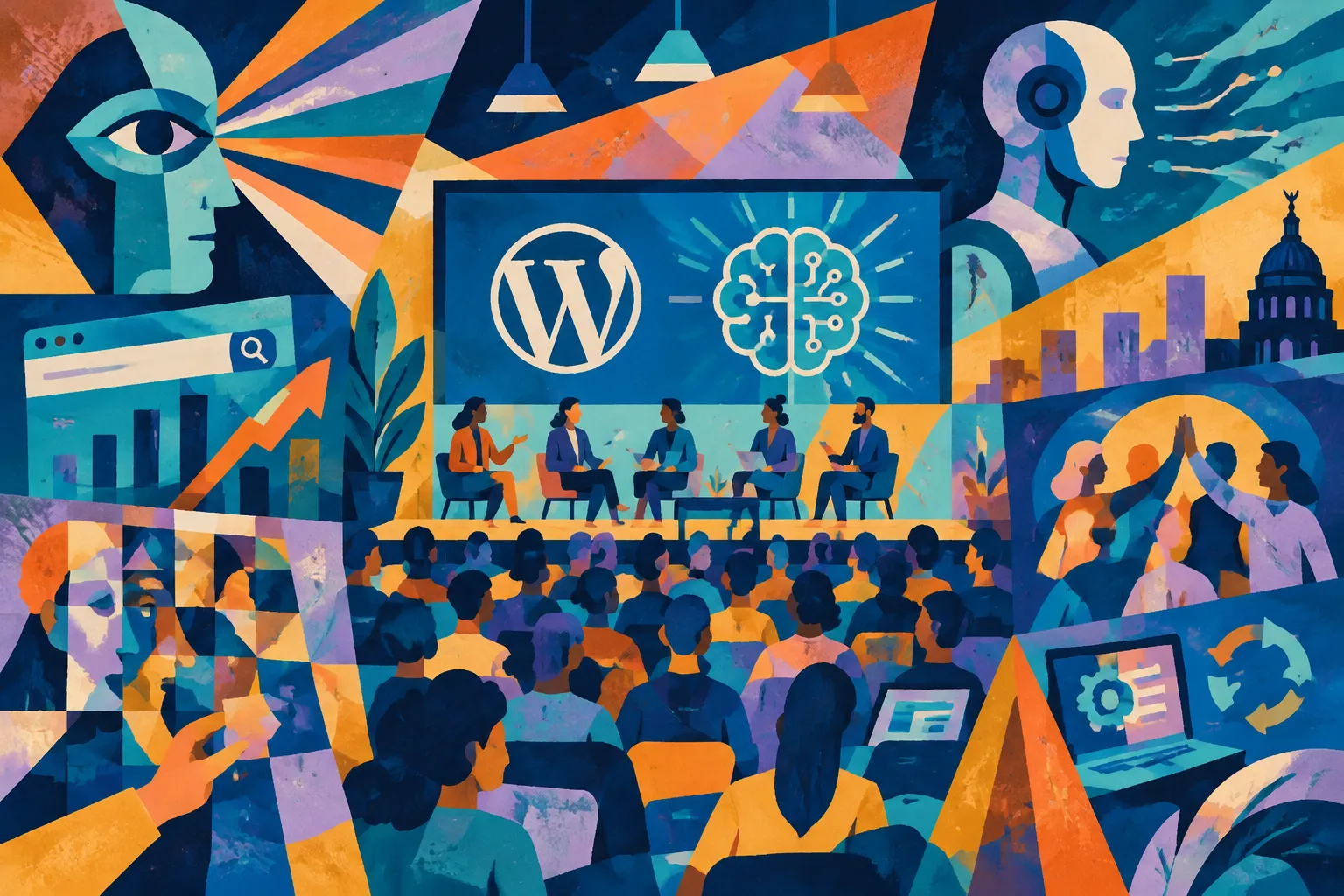
The second WP Agency Forum took place on 7 October 2026 at Talent Garden Madrid, drew 150 in-person attendees and over 200 online, and was organized by SiteGround España and Modular DS to focus on business strategy amid rapid AI-driven change in the sector.
The second WP Agency Forum took place on 7 October 2026 at Talent Garden Madrid, drew 150 in-person attendees and over 200 online, and was organized by SiteGround España and Modular DS to focus on business strategy amid rapid AI-driven change in the sector. Nine speakers addressed topics including AI and search positioning, new business models, team culture and the role of AI agents; Joan Boluda closed with a talk titled «Ya no uso WordPress», and organizers presented maintenance and AI-focused product updates.
Xavier Nueno (born 1990) won the Anagrama de Ensayo 2026 for La revuelta de los copistas, a book that argues that technology companies have appropriated the intellectual and creative holdings once stewarded by libraries and turned them into subscription commodities; Nueno frames the library as today’s most profitable monetization machine and traces the story through figures such as copyists and librarians, ending with large-scale piracy and mass scanning by AI companies.
Xavier Nueno (born 1990) won the Anagrama de Ensayo 2026 for La revuelta de los copistas, a book that argues that technology companies have appropriated the intellectual and creative holdings once stewarded by libraries and turned them into subscription commodities; Nueno frames the library as today’s most profitable monetization machine and traces the story through figures such as copyists and librarians, ending with large-scale piracy and mass scanning by AI companies.