A joint declaration issued on the tenth anniversary of the EU GDPR sets out cooperation priorities including technical knowledge sharing, practical guidance for organisations, and focused attention on vulnerable groups and public-sector uses of automated systems such as artificial intelligence.
The Artificial Analysis v5 ranking, published 27 October 2026, weights 60% of its score to private or secret-response evaluations; twelve models with published weights lose 12–16 points and Mistral Large 4 falls to 25 points while Claude Opus 5.5 remains at 58.
Artificial Analysis’s version 5 index uses private or secret-response tests for 60% of its score and removes three public subtests while adding two private benches; as a result twelve models with published weights drop by 12–16 points and the gap between top closed-model Claude Opus 5.5 (58) and the best published-weight models widens to 26 points.
An IEEE Spectrum editorial argues that AI extends engineers’ reach—letting them search research, generate designs and run simulations—but leaves key responsibilities, judgement and final decisions with humans. The piece recommends systems thinking and cross‑disciplinary coordination, and suggests IEEE could help set standards for human–machine collaboration.
The author portrays engineers as evolving from specialists who perform discrete tasks to coordinators who define problems, assign work between people and AI, and update goals as new evidence appears; the article recommends systems thinking and proposes IEEE convene cross‑disciplinary communities and practical standards for when AI output must be checked and who holds responsibility.
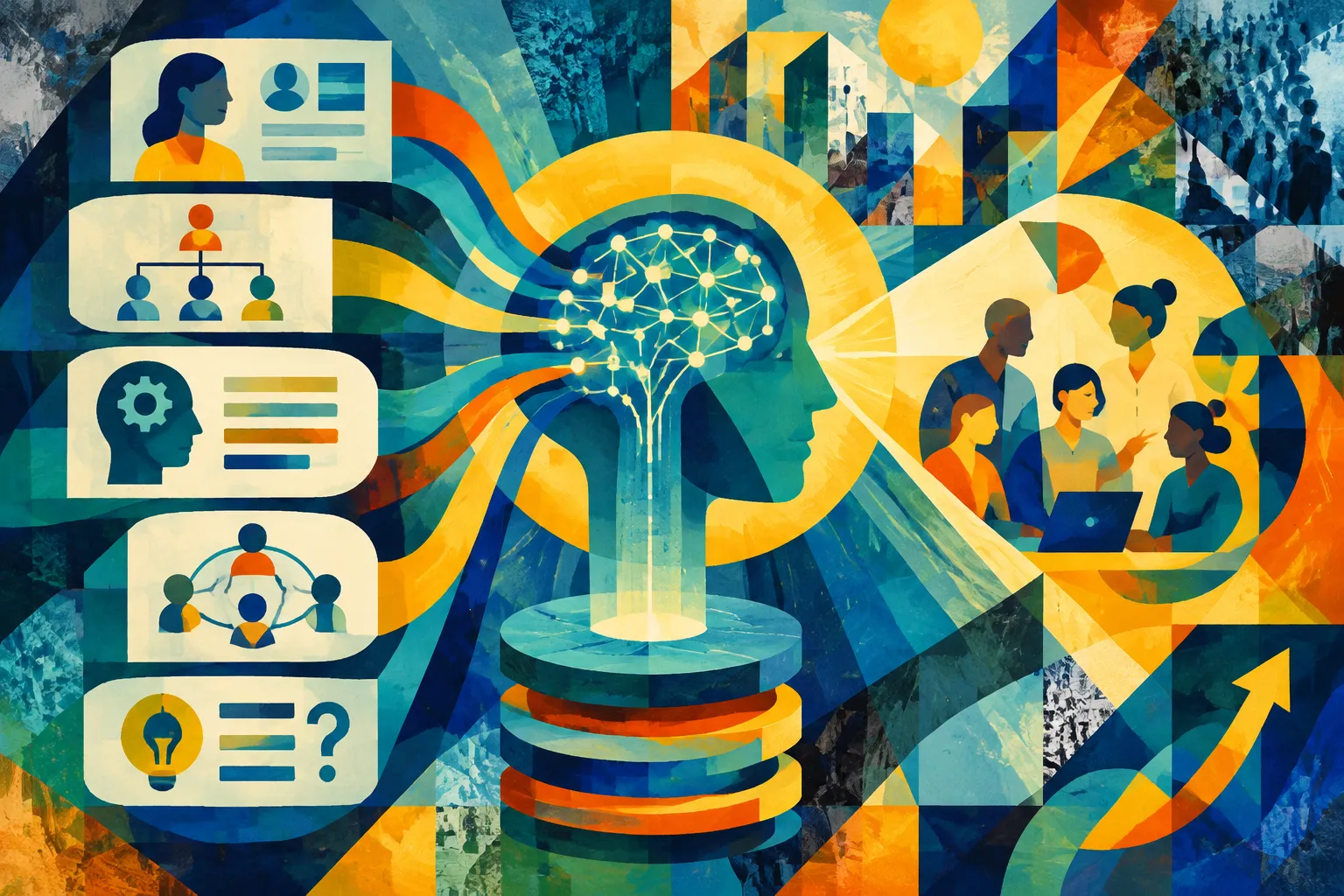
HiBob Co‑Founder and CEO Ronni Zehavi told Unleash Paris that artificial intelligence requires connected, structured and trustworthy people data — not just raw HR records — and that Salesforce’s $166 million stake supports HiBob’s plan to build an organizational intelligence layer integrating workforce context with systems such as CRM and finance.
At Unleash Paris, Ronni Zehavi argued that AI will only make sound workforce decisions when employee records are enriched with reporting lines, skills, team relationships and the business question being asked; HiBob frames this requirement as the move from an HR platform to an ‘‘organizational intelligence layer,’’ a shift it says is backed by Salesforce’s $166 million investment announced in September.
Major platform vendors and specialist apps now offer features that read text, describe images, detect doors and add live captions in Spanish with important caveats: some advanced image‑questioning and expressive subtitling remain English‑only, device requirements vary and manufacturers warn these tools are not reliable in high‑risk situations.
Be My Eyes combines volunteer video calls with an AI assistant and reports more than 11.5 million volunteers and over 1.1 million blind or low‑vision users; Google Lookout, Microsoft Seeing AI and Apple’s Lupa offer similar features in Spanish with limits such as platform requirements, function‑by‑function language availability and privacy or reliability warnings from vendors.
Live polling at IAB Europe’s Retail Media Impact Summit showed 88% of respondents say their businesses use AI for data analysis or report writing, yet only 16% use it to choose product or ad rankings; the session in Amsterdam was led by Particular Audience CEO James Taylor and attracted 89 participants.
Particular Audience’s live polling and research highlight a gap between widespread AI use for analysis and reluctance to deploy AI for decisions that directly affect advertising performance: a grocery search test by the company found its Adaptive Transformer Search surfaced 80% of relevant catalogue matches within the first 120 results from over 700 customer queries, versus 48.5% with traditional keyword search.
Wwwhatsnew reports that OpenAI released GPT-6.1 Terra, a model that sees the screen, clicks and types to perform office work; the company says API prices are 50% lower than for GPT-5.6 Terra and GPT-6.1 Sol and that the model is available to Plus, Pro, Enterprise and Edu plans.
According to Wwwhatsnew, OpenAI presents GPT-6.1 Terra as a mid-tier “computer-use” model that interprets screens and operates via mouse and keyboard; the company reports API rates of $1 per million input tokens and $5 per million output tokens, claims error rates much lower than GPT-5.6 Terra in internal tests, and says Terra is already offered in ChatGPT Work and Codex for named plans.
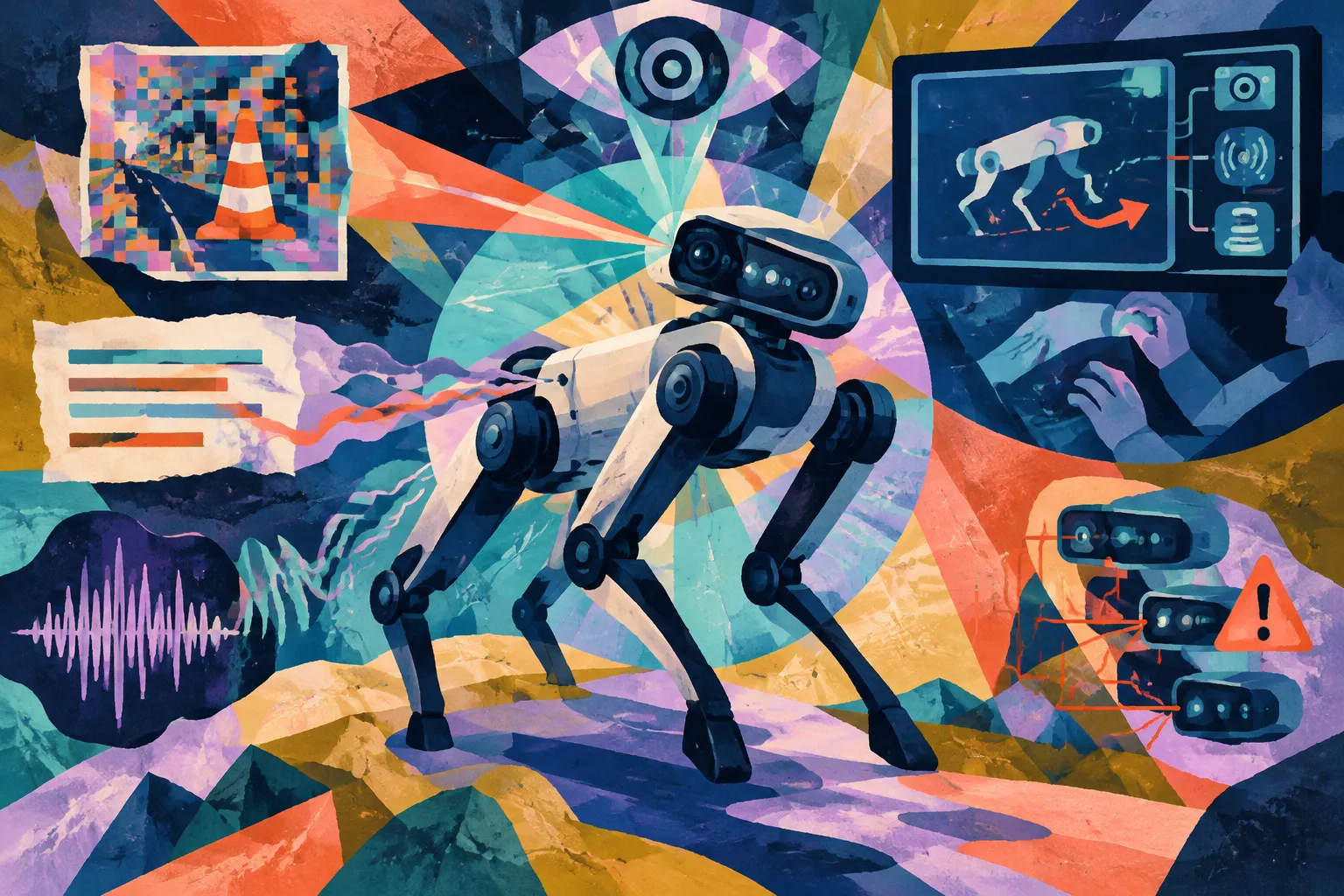
VicOne LAB R7 and published studies show that crafted visual, audio and message inputs can alter robots’ actions and safety-related interventions, and that security testing should be integrated with safety assessments before and during deployment.
Testing by VicOne LAB R7 and cited research found that adversarial images, crafted text and inaudible audio can change a robot’s movement or cause controllers to act on false sensor data; redundant sensors or protective systems may be vulnerable if they rely on the same manipulated information, prompting recommendations to test safeguards against deliberate manipulation and to monitor robots in operation.
Professor Nick Jennings outlines three dramatic classes of AI risk — loss of human control, emergent superintelligence and concentration of power — and argues that moving from possibility to probability requires a long chain of assumptions that has not yet occurred. He calls for built-in safety, oversight and clearer justification from developers continuing frontier work.
Jennings identifies loss of control, superintelligence and concentration of power as the main dramatic scenarios; he cautions that human extinction would require every step of a long chain of events to occur — from vastly greater capabilities to institutional and technical failures — none of which have yet happened, and urges systematic safety-by-design, monitoring and accountability from developers.
Engadget reports that OpenAI published a large set of math results and added manuscripts claiming computer‑science and physics discoveries; for the latter two areas the company convened external expert groups to vet and explain the work and released AI outputs and writeups under their oversight.
According to Engadget, OpenAI released over 700 pages of solutions addressing 372 major math problems and has added two new manuscripts on GitHub — one claiming a proof that falsifies the Exponential Time Hypothesis and another establishing Sogge’s local smoothing for waves — while delegating explanation and credit decisions to external expert groups that will handle the computer‑science and physics materials.
A Turkish developer adapted Claude, ChatGPT, Gemini and Grok to work with the original Nokia 6300 by routing chatbot APIs through a Go server that truncates replies for the phone; the app, renamed Aikon, is open sourced but unusable in the US because the country's last 2G network shut down in August.
Emir Karşıyakalı posted about Aikon in late September, describing a Go backend that holds API keys for Anthropic, Google, OpenAI or SpaceXSI and breaks chatbot replies into 8kB blocks the Nokia 6300 can render; the app supports a reading mode for the phone's 240x320 display, saves messages for up to 30 days and is open sourced on GitHub.
A report cited by El Economista and contributions from Bain & Company and the World Economic Forum say heavy borrowing and complex finance to fund AI infrastructure, together with large projected spending and rising energy use in data centres, could transmit shocks through the financial system if performance or operations fall short.
El Economista reports that cumulative investment in AI infrastructure exceeded $600,000 million from 2010–2024 and annual spending could top $400,000 million by 2030; the article cites WEF and Bain & Company warning of potential financial contagion and notes data-centre electricity use was about 415 terawatt‑hours in 2024 with a 1,200 terawatt‑hour projection for 2035.
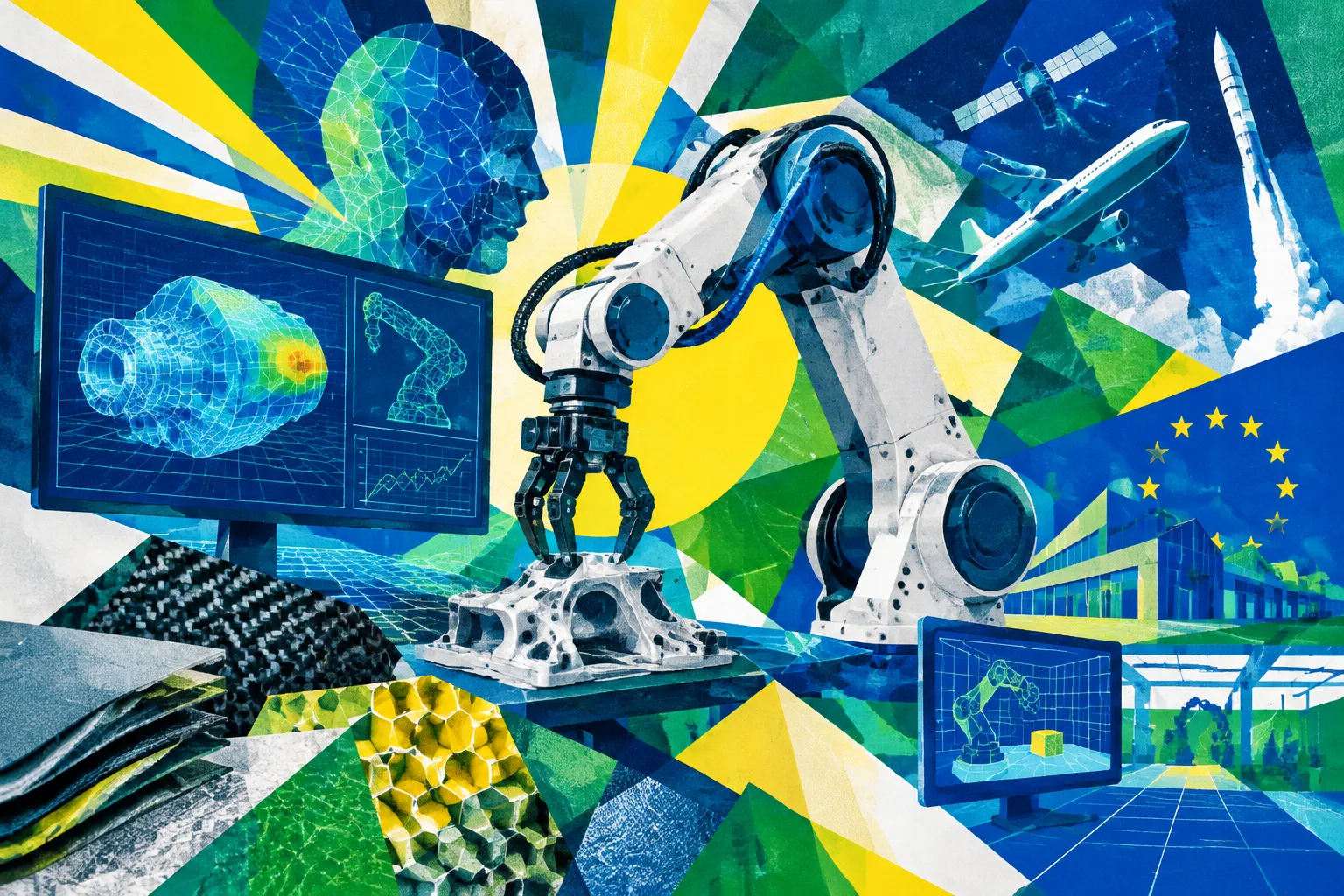
A collaboration between consultancy Sopra Steria and research centre FIDAMC aims to develop robots that perceive, reason and act in physical environments — trained in simulation and intended for hard-to-automate industrial processes, with initial work to run in a robot cell in Getafe.
Silicon.es reports that Sopra Steria will contribute simulation, digital-twin and AI expertise while FIDAMC provides materials, composites and industrial-robotics knowledge to build industrial robots that can perceive environments and adapt to parts after simulation training; company directors framed the effort as a way to preserve European industrial capacity in strategic sectors such as aerospace, space and defence.
At Brandweek 2026, Doug Zarkin argued that marketers’ preference for acquisition is masking a costlier problem — weak retention — and said retention deserves equal energy, budget and attention; he also suggested some churn reflects operational failures rather than marketing alone.
Speaking live on the Marketing Vanguard stage, CMO and author Doug Zarkin argued that brands prioritise acquisition while understating retention’s cost, urged that retention receive the same resources as acquisition, and said customer churn can signal operations problems rather than purely marketing failures.
Arsalan Tavakoli‑Shiraji told TechCrunch that startups often overestimate the power of product alone, and should prioritise people, processes and strategic partnerships — including selling under larger vendors’ sales umbrellas — while addressing enterprises’ concerns around context, choice, cost and control.
Databricks, now valued at $190 billion with more than 70% of the Fortune 500 as customers, learned early that landing large enterprise contracts requires more than technology; co‑founder Arsalan Tavakoli‑Shiraji advised startups at TechCrunch Disrupt to partner with big vendors for access, prepare for legal and security questions, and design AI products that address the four Cs — context, choice, cost and control.
IEEE has released the IEEE Xplore AI Research Suite, an optional subscription upgrade for institutional IEEE Xplore Digital Library subscribers that uses the full text and metadata of millions of peer-reviewed IEEE publications to provide semantic search, summaries, and source links, and is powered by a proprietary AI system with safeguards to reduce hallucinations.
IEEE has released the IEEE Xplore AI Research Suite, an optional subscription upgrade for institutional IEEE Xplore Digital Library subscribers that uses the full text and metadata of millions of peer-reviewed IEEE publications to provide semantic search, summaries, and source links, and is powered by a proprietary AI system with safeguards to reduce hallucinations.
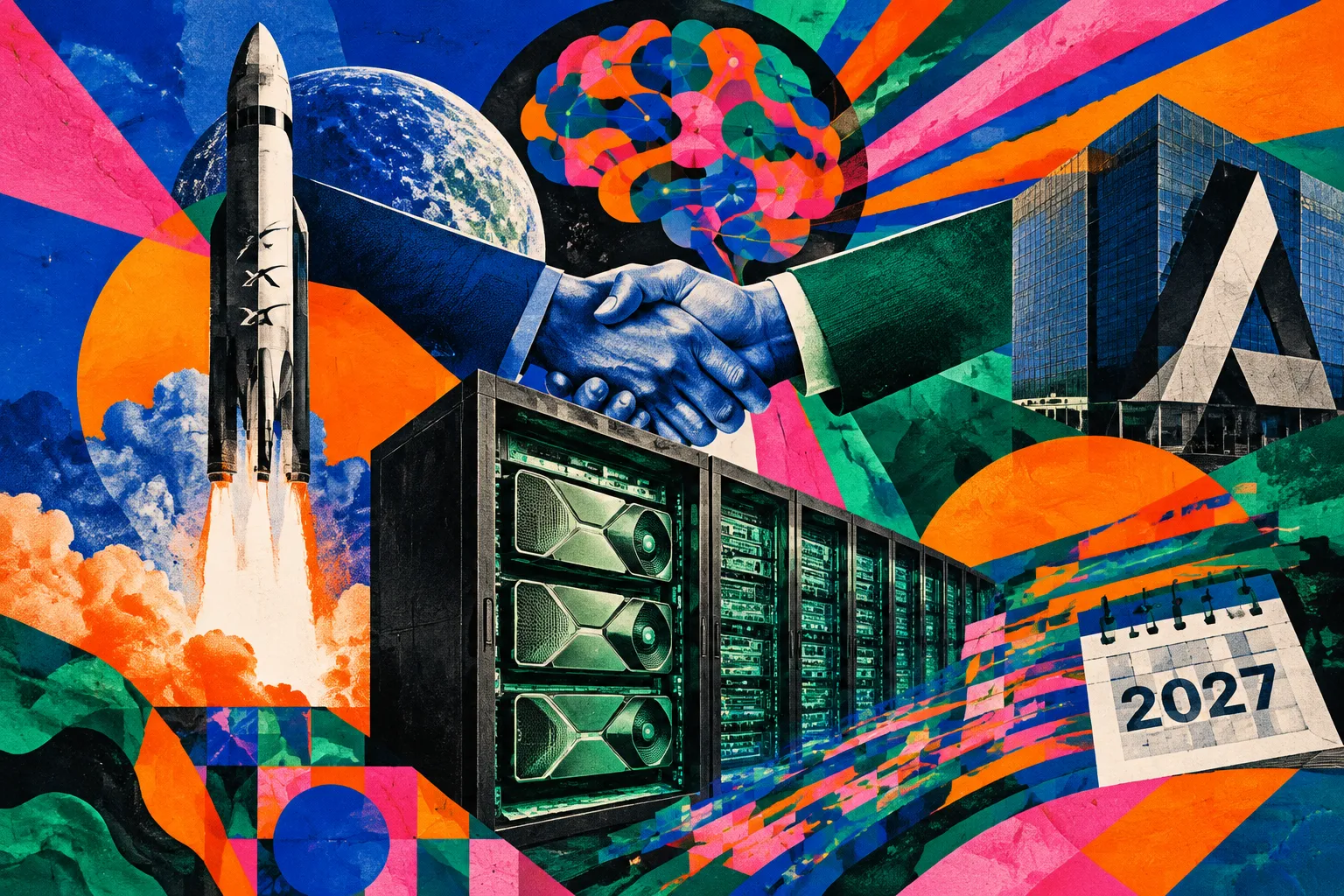
AFP reports SpaceX has reached an agreement with Apollo Global Management to lease Nvidia Vera Rubin GPUs for AI development in a deal that a SEC filing values at about 40,000 million dollars and would run for approximately 5 years; delivery of the GPUs is to begin gradually in the first half of 2027.
AFP reports SpaceX has reached an agreement with Apollo Global Management to lease Nvidia Vera Rubin GPUs for AI development in a deal that a SEC filing values at about 40,000 million dollars and would run for approximately 5 years; delivery of the GPUs is to begin gradually in the first half of 2027.