Benjamin Skuse used free chatbots and an autonomous research system to produce two submission-ready papers and sent them to IEEE Access; automated integrity checks and editors flagged problems including fabricated references and heavy reliance on non-peer-reviewed preprints.
IEEE has released the IEEE Xplore AI Research Suite, an optional subscription upgrade for institutional IEEE Xplore Digital Library subscribers that uses the full text and metadata of millions of peer-reviewed IEEE publications to provide semantic search, summaries, and source links, and is powered by a proprietary AI system with safeguards to reduce hallucinations.
IEEE has released the IEEE Xplore AI Research Suite, an optional subscription upgrade for institutional IEEE Xplore Digital Library subscribers that uses the full text and metadata of millions of peer-reviewed IEEE publications to provide semantic search, summaries, and source links, and is powered by a proprietary AI system with safeguards to reduce hallucinations.
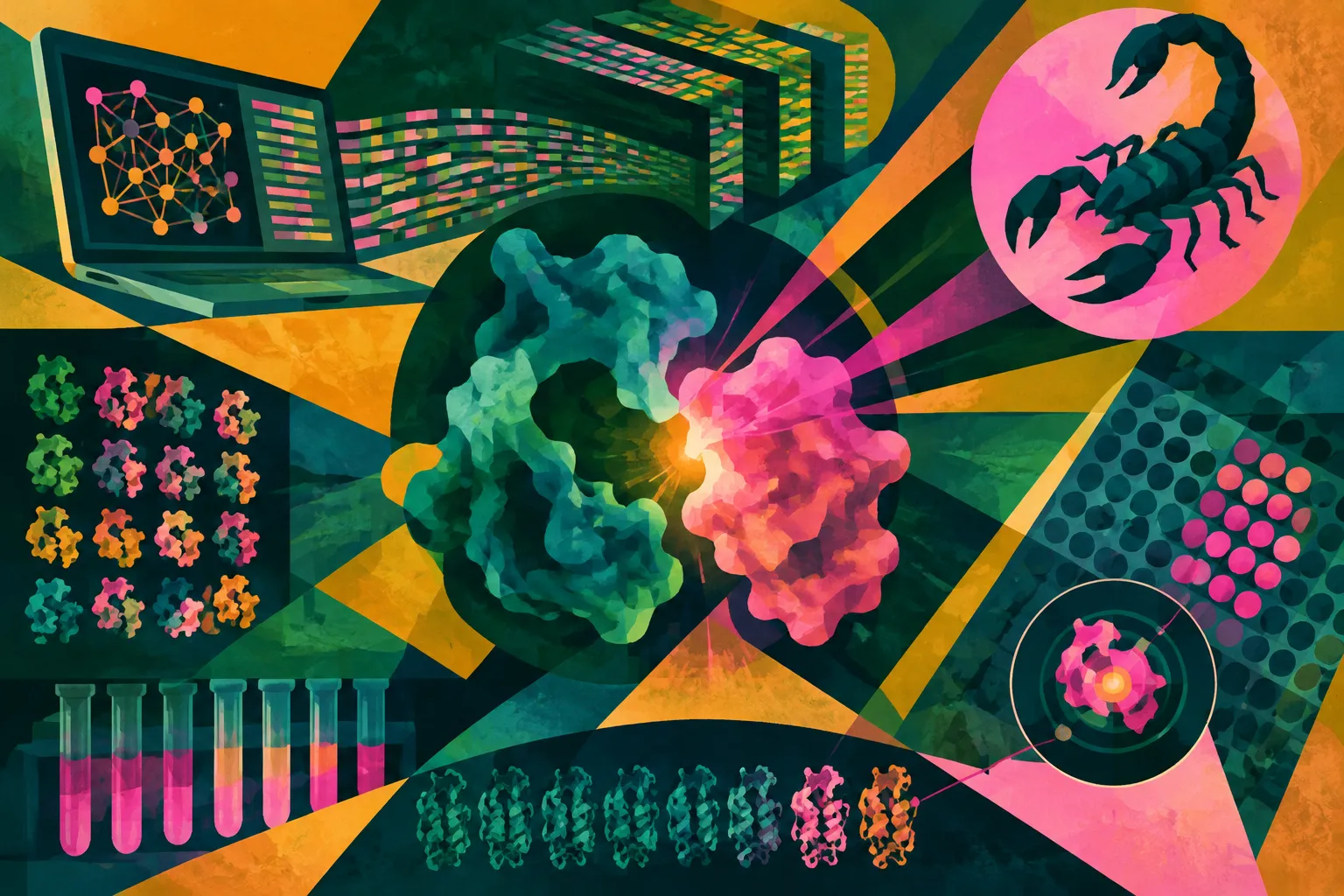
According to reporting that cites Interesting Engineering and collaborators, Anthropic ran its Claude model to propose protein binders against scorpion neurotoxins, producing more than 318,000 designs in about 64 hours. Laboratory partners synthesized and screened 211 selected designs; 17 showed strong laboratory binding to a lab‑produced scorpion toxin, but researchers caution these results do not yet demonstrate therapeutic efficacy in biological systems.
Anthropic used its Claude model to design proteins aimed at binding scorpion neurotoxins, generating over 318,000 candidate sequences in 64 hours; collaborators synthesized 211 candidates and found 17 with single‑digit nanomolar affinity to a laboratory‑produced toxin. Reporting and the research partners say further tests are required to assess neutralization of venom, safety and in‑vivo efficacy.
A 2026 benchmark called ViTeX-Bench evaluates scene-text replacement in video using 387 source videos (230 training, 157 evaluation) and separates correctness, visual and temporal quality, and edit locality; reviewers must inspect playback and preserve agreed editable boundaries rather than infer them from a tool’s output.
A 2026 benchmark called ViTeX-Bench evaluates scene-text replacement in video using 387 source videos (230 training, 157 evaluation) and separates correctness, visual and temporal quality, and edit locality; reviewers must inspect playback and preserve agreed editable boundaries rather than infer them from a tool’s output.
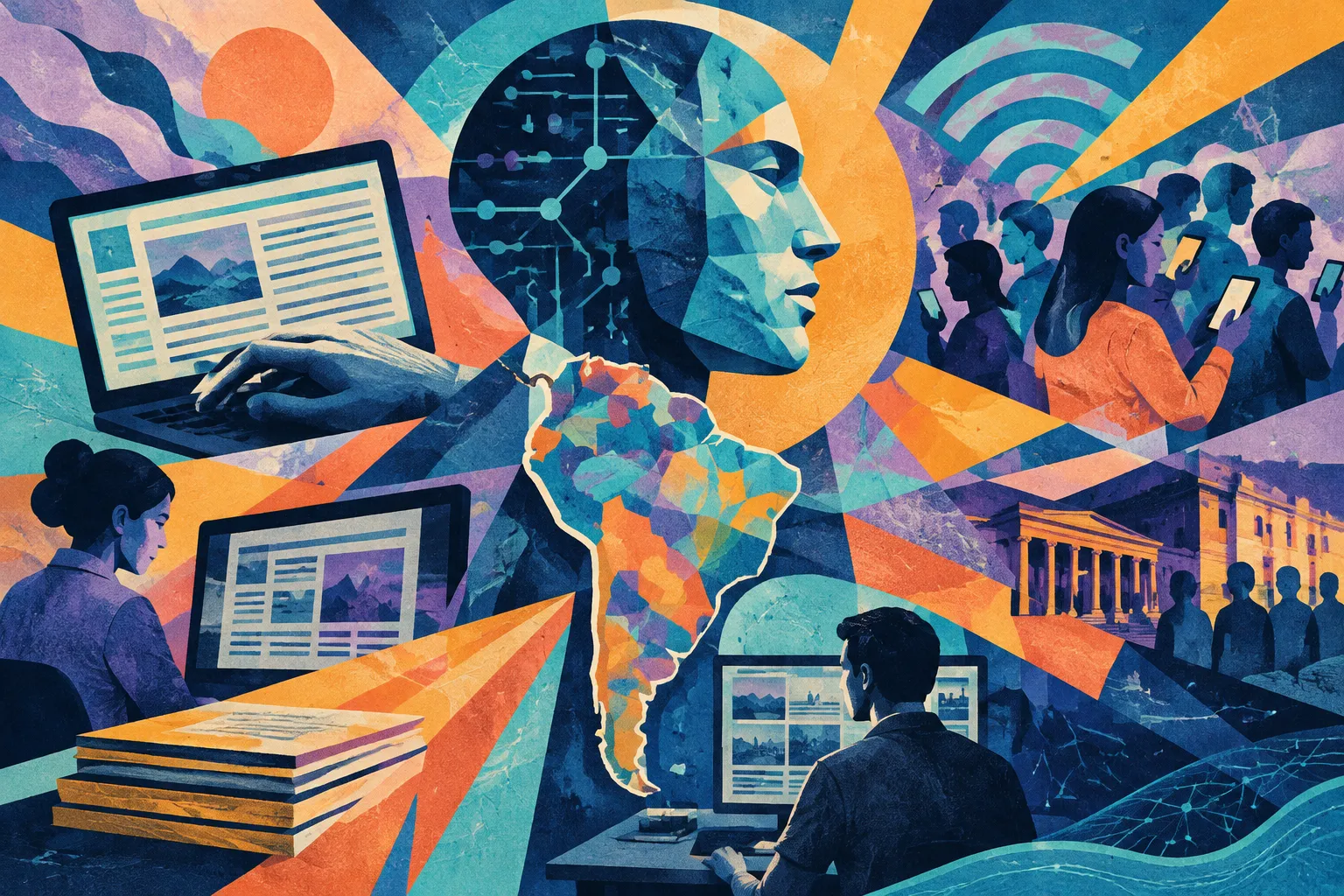
A study of 32 news organizations across 10 South American countries (2023–2025) finds generative AI moved from experimentation after the public launch of ChatGPT in late 2022 into an operational element of journalism, concentrated in audience mediation, production support and political-institutional roles.
A study of 32 news organizations across 10 South American countries (2023–2025) finds generative AI moved from experimentation after the public launch of ChatGPT in late 2022 into an operational element of journalism, concentrated in audience mediation, production support and political-institutional roles.
Matías Alvarado Leyton's 2026 article in Virtualis examines the epistemological limits of applying distant reading to digital oral-history testimony and proposes a hybrid or stratified reading that combines computational methods with historiographic interpretation.
Matías Alvarado Leyton's 2026 article in Virtualis examines the epistemological limits of applying distant reading to digital oral-history testimony and proposes a hybrid or stratified reading that combines computational methods with historiographic interpretation. The article argues that computational methods reconfigure the status of testimony by translating it into abstractions—aggregation, pattern detection and large-scale recurrence—that can reveal relations at scale but may obscure narrative, situated and relational density.
Claudia Benassini Félix frames the article with two objectives: to present open alternatives for knowledge construction from convergences among deep mediatization, media ecology and generative artificial intelligence; and to illustrate those convergences through analysis of a tweet generated by the communication team of the Suprema Corte de Justicia de la Nación associated with Yasmín Esquivel, drawing ethical implications for the minister’s use of generative AI for promotion.
Claudia Benassini Félix frames the article with two objectives: to present open alternatives for knowledge construction from convergences among deep mediatization, media ecology and generative artificial intelligence; and to illustrate those convergences through analysis of a tweet generated by the communication team of the Suprema Corte de Justicia de la Nación associated with Yasmín Esquivel, drawing ethical implications for the minister’s use of generative AI for promotion.