An IEEE Spectrum editorial argues that AI extends engineers’ reach—letting them search research, generate designs and run simulations—but leaves key responsibilities, judgement and final decisions with humans. The piece recommends systems thinking and cross‑disciplinary coordination, and suggests IEEE could help set standards for human–machine collaboration.
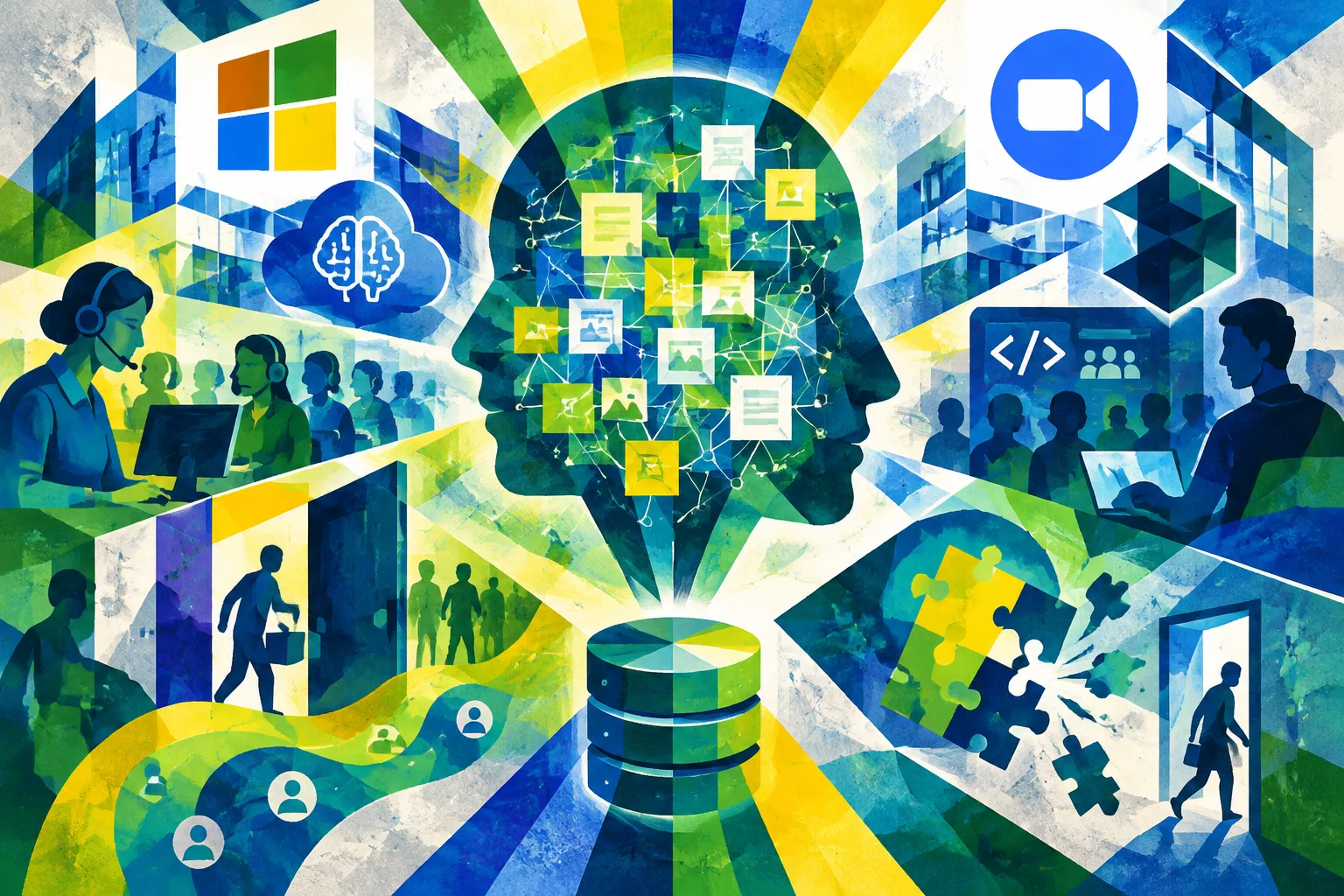
UC Today reporter Rob Scott says this week's UC and CX moves centre on "context": Microsoft has announced a Voluntary Exit Offer affecting about 60,000 eligible employees while launching Contact Center Intelligence that plugs Microsoft AI into other vendors' contact centres; Zoom has acquired Onyx, an open‑source enterprise search platform that connects to more than 50 apps and handles over 1,000,000 queries per week.
Rob Scott reports that Microsoft simultaneously offered a voluntary exit to eligible employees and put an AI layer — Microsoft Contact Center Intelligence — on third‑party contact centres, while Zoom bought Onyx, a searchable enterprise memory platform with a 30,000‑developer community; Scott frames these moves as a broader industry competition over who controls organisational 'context' and the cost of taking it when customers leave.
HiBob Co‑Founder and CEO Ronni Zehavi told Unleash Paris that artificial intelligence requires connected, structured and trustworthy people data — not just raw HR records — and that Salesforce’s $166 million stake supports HiBob’s plan to build an organizational intelligence layer integrating workforce context with systems such as CRM and finance.
At Unleash Paris, Ronni Zehavi argued that AI will only make sound workforce decisions when employee records are enriched with reporting lines, skills, team relationships and the business question being asked; HiBob frames this requirement as the move from an HR platform to an ‘‘organizational intelligence layer,’’ a shift it says is backed by Salesforce’s $166 million investment announced in September.
VicOne LAB R7 and published studies show that crafted visual, audio and message inputs can alter robots’ actions and safety-related interventions, and that security testing should be integrated with safety assessments before and during deployment.
Testing by VicOne LAB R7 and cited research found that adversarial images, crafted text and inaudible audio can change a robot’s movement or cause controllers to act on false sensor data; redundant sensors or protective systems may be vulnerable if they rely on the same manipulated information, prompting recommendations to test safeguards against deliberate manipulation and to monitor robots in operation.
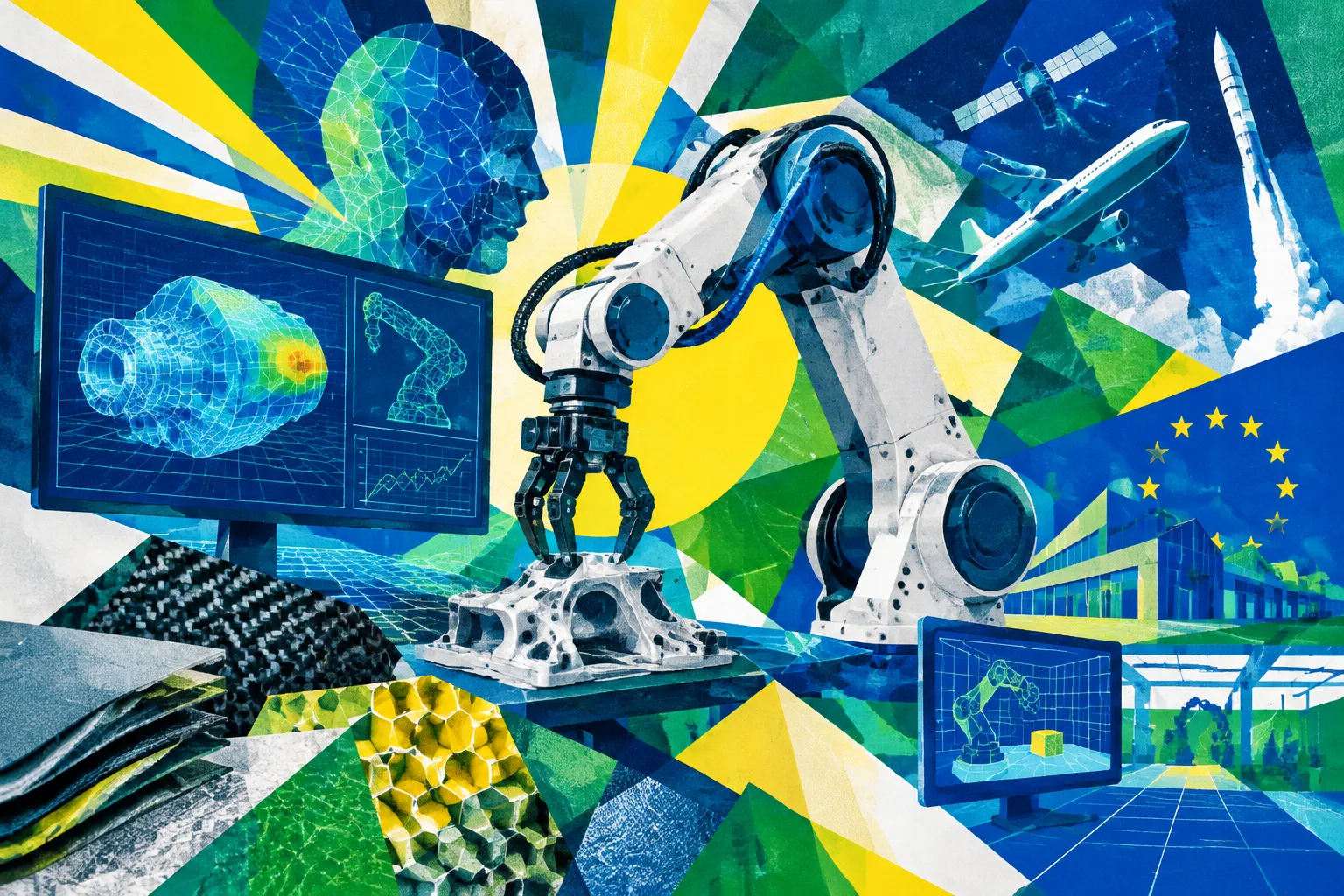
A collaboration between consultancy Sopra Steria and research centre FIDAMC aims to develop robots that perceive, reason and act in physical environments — trained in simulation and intended for hard-to-automate industrial processes, with initial work to run in a robot cell in Getafe.
Silicon.es reports that Sopra Steria will contribute simulation, digital-twin and AI expertise while FIDAMC provides materials, composites and industrial-robotics knowledge to build industrial robots that can perceive environments and adapt to parts after simulation training; company directors framed the effort as a way to preserve European industrial capacity in strategic sectors such as aerospace, space and defence.
Arsalan Tavakoli‑Shiraji told TechCrunch that startups often overestimate the power of product alone, and should prioritise people, processes and strategic partnerships — including selling under larger vendors’ sales umbrellas — while addressing enterprises’ concerns around context, choice, cost and control.
Databricks, now valued at $190 billion with more than 70% of the Fortune 500 as customers, learned early that landing large enterprise contracts requires more than technology; co‑founder Arsalan Tavakoli‑Shiraji advised startups at TechCrunch Disrupt to partner with big vendors for access, prepare for legal and security questions, and design AI products that address the four Cs — context, choice, cost and control.
UC Today reported that UNLEASH Paris focused its AI conversation on human contexts and workforce strategy, with interviews indicating that organisational context, job redesign and skills — not tools alone — will shape who progresses with AI; the article noted Salesforce’s $166 million investment in HiBob and quoted HiBob CEO Ronni Zehavi on the need to redesign work for human–agent collaboration.
UC Today reported that UNLEASH Paris focused its AI conversation on human contexts and workforce strategy, with interviews indicating that organisational context, job redesign and skills — not tools alone — will shape who progresses with AI; the article noted Salesforce’s $166 million investment in HiBob and quoted HiBob CEO Ronni Zehavi on the need to redesign work for human–agent collaboration.
Legal-technology startup IamVERA, founded in 2026 and developed by The Coding Company B.V., positions itself as a configurable verification and privacy layer that routes draft generation, factual audits, adversarial reviews and source checks across different models while pseudonymising sensitive values before external API calls.
IamVERA, led by founder Victor Angelier, runs a multi-model verification console that assigns distinct roles—drafting, fact-auditing, adversarial challenge and live source verification—to different models, records model steps and costs, and adds a Semantic Privacy Shield that pseudonymises sensitive values inside a customer-isolated environment and restores originals after workflows complete.
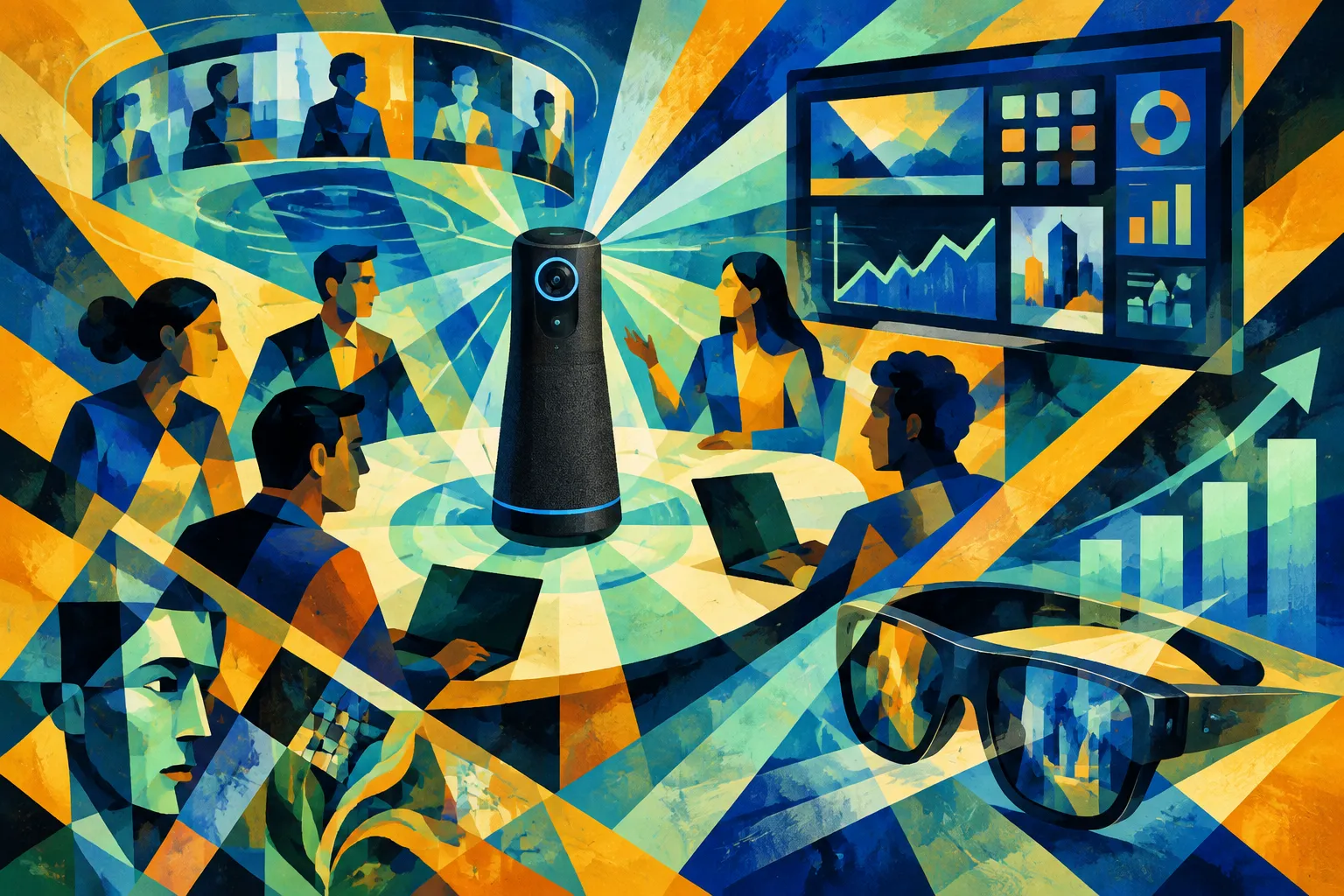
Owl Labs launched the Meeting Owl 5, a BYOD-focused centre-of-table collaboration device with 4K 360° video, AI speaker tracking and eight beamforming microphones, priced at $1,499 in the US and due in Europe in early November; Navori released Qompose to connect screens to live data and apps; EssilorLuxottica reported wearables revenue growth of 20% in the third quarter of 2026.
Owl Labs launched the Meeting Owl 5, a BYOD-focused centre-of-table collaboration device with 4K 360° video, AI speaker tracking and eight beamforming microphones, priced at $1,499 in the US and due in Europe in early November; Navori released Qompose to connect screens to live data and apps; EssilorLuxottica reported wearables revenue growth of 20% in the third quarter of 2026.
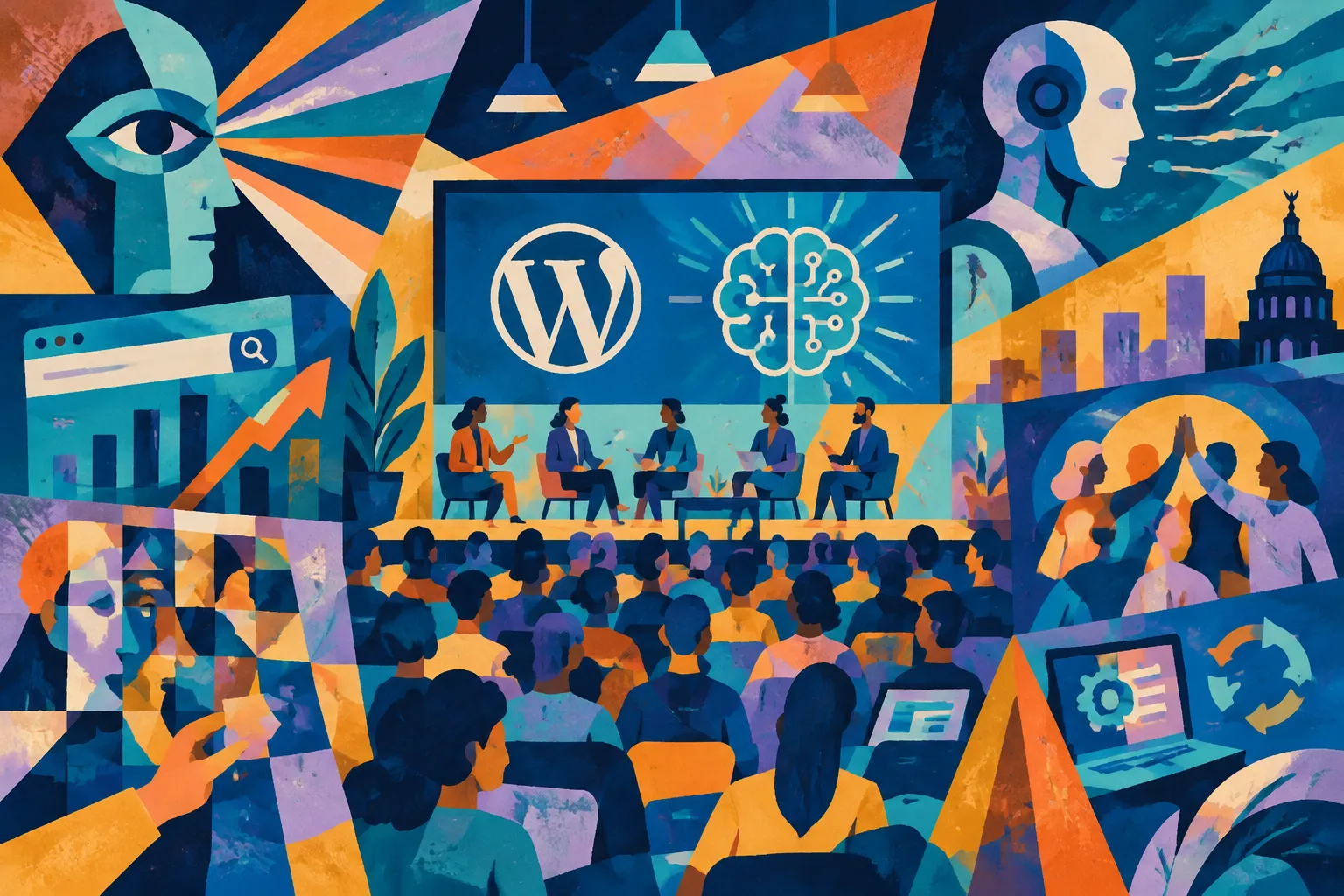
The second WP Agency Forum took place on 7 October 2026 at Talent Garden Madrid, drew 150 in-person attendees and over 200 online, and was organized by SiteGround España and Modular DS to focus on business strategy amid rapid AI-driven change in the sector.
The second WP Agency Forum took place on 7 October 2026 at Talent Garden Madrid, drew 150 in-person attendees and over 200 online, and was organized by SiteGround España and Modular DS to focus on business strategy amid rapid AI-driven change in the sector. Nine speakers addressed topics including AI and search positioning, new business models, team culture and the role of AI agents; Joan Boluda closed with a talk titled «Ya no uso WordPress», and organizers presented maintenance and AI-focused product updates.
HUMXN is offering free plumbing, electrical, HVAC, air-duct and carpet cleaning in exchange for allowing workers to wear capture devices inside homes; the program will run in Minneapolis, Chicago and Miami, the company says.
HUMXN says it will pay for qualifying home services and record technicians using wearable capture technology to collect real‑world training data for AI robots; the lab announced pilot activity in three cities and framed the program as a way to capture technicians’ on-the-job decisions and movements across diverse homes and climates.
A report cited by AI Talks says a majority of banks already deploy generalist or agentic AI for customer-facing tasks such as fraud detection, staff support and self‑service automation. Industry surveys also record that 23% of organisations are scaling agentic systems while 39% are experimenting, and experts warn adoption must be paired with governance, traceability and human supervision.
AI Talks reports that, according to the European Banking Authority, 55% of banks surveyed use generalist or agentic AI in customer processes—notably for fraud detection, notifications and support—and that sector studies in 2025 put 23% of organisations at scaling stage and 39% experimenting; commentators and a Qaracter barometer highlight strong customer concern and call for strict governance and human oversight.
Abel Márquez, Lead Technology Product Manager at Wolters Kluwer Tax & Accounting Spain, describes a transition from pilots to deployment of AI embedded in business processes, highlights use cases in labour management and knowledge‑intensive tasks, and stresses human‑in‑the‑loop supervision and responsible‑AI principles.
In an interview, Abel Márquez says many Spanish organisations have moved beyond isolated tests and now seek concrete, productivity‑focused AI use cases; Wolters Kluwer presents an ‘expert’ AI integrated into workflows for labour management that works with real customer data and keeps final decisions with professionals.
Manuel Navarro reports that HP markets the EliteBook X G2i as a laptop family that integrates on-device and software AI features — from Poly Studio collaboration tools to Copilot in Windows — intended to cut interruptions, speed routine tasks and ease enterprise adoption of intelligent workflows.
The HP EliteBook X G2i is presented as a productivity-focused laptop line that bundles AI-driven meeting and collaboration features (noise cancellation, background blur, voice adjustment) integrated with Poly Studio technologies, Intel Core Ultra processors described as tuned for AI workloads, batteries of up to 6 cells, and Windows Copilot support — all framed as measures to reduce interruptions and simplify business adoption of AI.
Itera Process, a systems-integration firm with 25 years of experience, announced Frontier by Itera, a program that it says aims to accelerate adoption of AI-native and agentic architectures while providing governance, compliance and resilience through managed services and modular accelerators.
Frontier by Itera bundles maturity assessment, a Control Plane for traceability, an agent-focused ADLC, production-ready Frontier Swarm on AWS and a Quick Adoption methodology; Itera frames governance as a precondition for safely scaling agentic AI and offers 24×7 managed services to operationalize that governance.
Softtek describes the labour market as at an inflection point and identifies five emerging AI-focused roles — prompt engineers, ethics and bias specialists, AI trainers, auditors and solution architects — that it expects to be in greater demand as companies pursue digital transformation and regulatory resilience.
Softtek projects that artificial intelligence has become central to corporate innovation and highlights five specific professional profiles it expects to gain prominence in 2026–2027: prompt engineers who craft model instructions, specialists in AI ethics and bias, trainers who curate data and refine models, auditors who check security and compliance, and architects who integrate AI into business systems.
Orange Business’s white paper says the rise of generative and agentic AI has produced an unprecedented technological acceleration and argues that integrating AI at scale is primarily an organizational and strategic challenge rather than purely a technical one; the paper also highlights systemic risks including a possible financial bubble, threats to democracy from disinformation, and geopolitical concentration of tech and political influence.
Orange Business’s white paper says the rise of generative and agentic AI has produced an unprecedented technological acceleration and argues that integrating AI at scale is primarily an organizational and strategic challenge rather than purely a technical one; the paper also highlights systemic risks including a possible financial bubble, threats to democracy from disinformation, and geopolitical concentration of tech and political influence.
Orange Business hosted (with Axys) a webinar, available as a replay, that presents using AI to bridge Finance and ESG data to improve reliability, speed and compliance, and offers practical guidance including use cases (deduplication, standardisation), automated data-quality approaches, a ROI roadmap, and a nine-pillar framework.
Orange Business hosted (with Axys) a webinar, available as a replay, that presents using AI to bridge Finance and ESG data to improve reliability, speed and compliance, and offers practical guidance including use cases (deduplication, standardisation), automated data-quality approaches, a ROI roadmap, and a nine-pillar framework.