20minutos reports that Baby Queen is an AI-generated pop group from China and that one of its virtual singers, Mity, posted that she is "pregnant" and will temporarily leave the group to rest and recover.
According to reporting that cites Interesting Engineering and collaborators, Anthropic ran its Claude model to propose protein binders against scorpion neurotoxins, producing more than 318,000 designs in about 64 hours. Laboratory partners synthesized and screened 211 selected designs; 17 showed strong laboratory binding to a lab‑produced scorpion toxin, but researchers caution these results do not yet demonstrate therapeutic efficacy in biological systems.
Anthropic used its Claude model to design proteins aimed at binding scorpion neurotoxins, generating over 318,000 candidate sequences in 64 hours; collaborators synthesized 211 candidates and found 17 with single‑digit nanomolar affinity to a laboratory‑produced toxin. Reporting and the research partners say further tests are required to assess neutralization of venom, safety and in‑vivo efficacy.
At the Academy Museum premiere in Los Angeles, director Travis Knight criticized generative AI, saying "Que la IA se vaya a la mierda," and argued that while pencils, brushes, 3D printers and digital capture are tools, generative AI ceases to be a tool when it supplants the artist; the reporting is by Miguel Ángel Romero for CINEMANÍA/20Minutos.
At the Academy Museum premiere in Los Angeles, director Travis Knight criticized generative AI, saying "Que la IA se vaya a la mierda," and argued that while pencils, brushes, 3D printers and digital capture are tools, generative AI ceases to be a tool when it supplants the artist; the reporting is by Miguel Ángel Romero for CINEMANÍA/20Minutos.
Denise Muyco, Co‑Founder and CEO of RAVEL, frames the company as an orchestration layer that coordinates compute, networking, storage, security and policy across distributed AI environments to improve utilization and respect sovereignty constraints (claims drawn from RAVEL’s product descriptions and Muyco’s interview).
Denise Muyco, Co‑Founder and CEO of RAVEL, frames the company as an orchestration layer that coordinates compute, networking, storage, security and policy across distributed AI environments to improve utilization and respect sovereignty constraints (claims drawn from RAVEL’s product descriptions and Muyco’s interview). Muyco links RAVEL’s approach to her prior work building a shared high‑performance compute consortium for roughly 30 Vancouver studios, and she argues that federation plus intelligent orchestration unlocks usable capacity more effectively than simply adding GPUs (claims supported by her descriptions of past projects and infrastructure inefficiencies).
Legal-technology startup IamVERA, founded in 2026 and developed by The Coding Company B.V., positions itself as a configurable verification and privacy layer that routes draft generation, factual audits, adversarial reviews and source checks across different models while pseudonymising sensitive values before external API calls.
IamVERA, led by founder Victor Angelier, runs a multi-model verification console that assigns distinct roles—drafting, fact-auditing, adversarial challenge and live source verification—to different models, records model steps and costs, and adds a Semantic Privacy Shield that pseudonymises sensitive values inside a customer-isolated environment and restores originals after workflows complete.
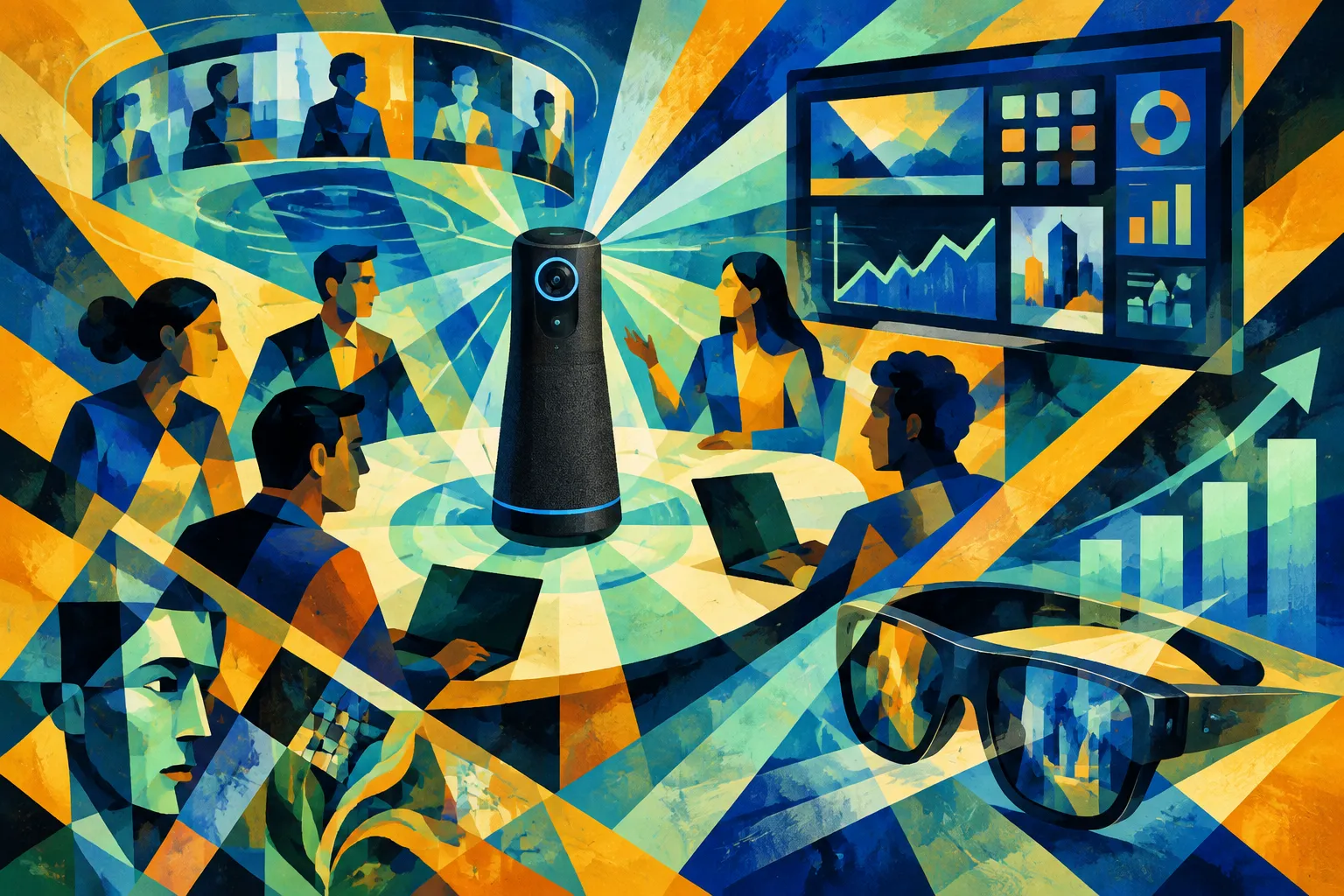
Owl Labs launched the Meeting Owl 5, a BYOD-focused centre-of-table collaboration device with 4K 360° video, AI speaker tracking and eight beamforming microphones, priced at $1,499 in the US and due in Europe in early November; Navori released Qompose to connect screens to live data and apps; EssilorLuxottica reported wearables revenue growth of 20% in the third quarter of 2026.
Owl Labs launched the Meeting Owl 5, a BYOD-focused centre-of-table collaboration device with 4K 360° video, AI speaker tracking and eight beamforming microphones, priced at $1,499 in the US and due in Europe in early November; Navori released Qompose to connect screens to live data and apps; EssilorLuxottica reported wearables revenue growth of 20% in the third quarter of 2026.
Discovery is shifting from traditional search to AI systems that synthesize answers before users reach websites, prompting the rise of Generative Engine Optimization (GEO) and a need for organizational redesign to manage AI visibility across marketing, data, technology, content and communications.
Discovery is shifting from traditional search to AI systems that synthesize answers before users reach websites, prompting the rise of Generative Engine Optimization (GEO) and a need for organizational redesign to manage AI visibility across marketing, data, technology, content and communications. Industry data show rapid effects: an IAB update reports 44% of U.S. ad buyers named adapting to changing consumer behavior as a top challenge and 76% are increasing focus on AI-optimized content; publishers and analytics firms report large declines in traditional traffic and surging AI-referred visits (46% decline in Google traffic for Reach; 693.4% AI referral growth for U.S. retail in 2025’s holiday season). GEO requires technical accessibility, consistent authoritative content, structured data and third‑party signals — and a single accountable leader coordinating cross‑team responses and measurement because AI answers are fluid and influenced by many sources.
Adobe’s Enhance Audio, included in the Premiere beta, splits a clip into speech, music, ambience, sound effects and reverb so editors can rebalance elements and keep cutting without blocking renders; a local model (V1) runs on the user’s machine while a higher-quality cloud model (V2) uses Firefly and charges two generative credits per minute, and Premiere processes five seconds of handles on each side of clips to reduce reprocessing.
Adobe’s Enhance Audio, included in the Premiere beta, splits a clip into speech, music, ambience, sound effects and reverb so editors can rebalance elements and keep cutting without blocking renders; a local model (V1) runs on the user’s machine while a higher-quality cloud model (V2) uses Firefly and charges two generative credits per minute, and Premiere processes five seconds of handles on each side of clips to reduce reprocessing.
A 2026 benchmark called ViTeX-Bench evaluates scene-text replacement in video using 387 source videos (230 training, 157 evaluation) and separates correctness, visual and temporal quality, and edit locality; reviewers must inspect playback and preserve agreed editable boundaries rather than infer them from a tool’s output.
A 2026 benchmark called ViTeX-Bench evaluates scene-text replacement in video using 387 source videos (230 training, 157 evaluation) and separates correctness, visual and temporal quality, and edit locality; reviewers must inspect playback and preserve agreed editable boundaries rather than infer them from a tool’s output.
A poster for the National Gallery of Victoria’s triennial reproduces an image from Ayoung Kim’s multi-channel video Delivery Dancer’s Arc: Inverse (2024), a work created using generative AI alongside CGI, game engines and live action; Reddit commenters disparaged the poster for using AI without distinguishing artists who use AI from AI replacing artists.
A poster for the National Gallery of Victoria’s triennial reproduces an image from Ayoung Kim’s multi-channel video Delivery Dancer’s Arc: Inverse (2024), a work created using generative AI alongside CGI, game engines and live action; Reddit commenters disparaged the poster for using AI without distinguishing artists who use AI from AI replacing artists. The Conversation’s author Sara Oscar frames a broader paradox: generative AI both saturates visual culture with what she calls “AI slop” and offers an experimental site where artists can reveal the technology’s limits and impacts on labour and seeing.
Ellia Lebleu, a founding member of the WikiProject AI Cleanup, says volunteers launched the effort in 2023 after noticing AI-written articles; by 2025 AI text patterns had grown subtler and volunteers are combining human review with detection tools and source-verification AIs to remove problematic machine-generated content.
Ellia Lebleu, a founding member of the WikiProject AI Cleanup, says volunteers launched the effort in 2023 after noticing AI-written articles; by 2025 AI text patterns had grown subtler and volunteers are combining human review with detection tools and source-verification AIs to remove problematic machine-generated content. Lebleu says she worked with detection firm Pangram, which flagged about 20 percent of new articles and drafts as AI-generated in late 2025 and about 15 to 16 percent in early 2026; she characterizes those figures as a conservative lower bound.
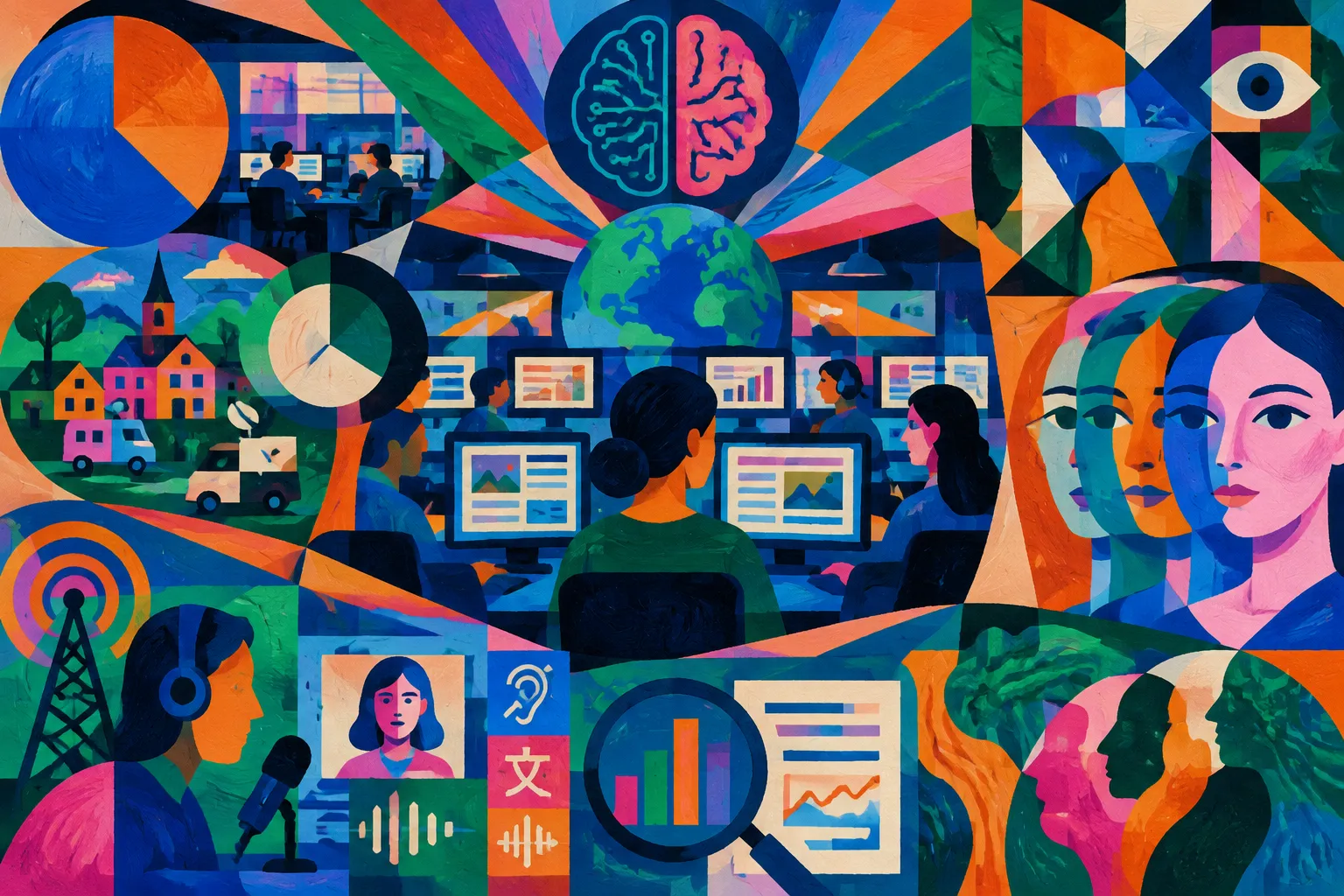
J·Index, compiled by journalist Katya Gorchinskaya, documents more than 3,000 publicly reported uses of artificial intelligence in news organizations and finds that 60% of those implementations take place within newsrooms, while about one third correspond to small, local or hyperlocal media.
J·Index, compiled by journalist Katya Gorchinskaya, documents more than 3,000 publicly reported uses of artificial intelligence in news organizations and finds that 60% of those implementations take place within newsrooms, while about one third correspond to small, local or hyperlocal media. The database shows patterns in assistant architectures, differing strategies by organization size and public broadcasters' greater tendency to train proprietary models and apply AI to accessibility and minority-language work; it also notes scarce measurement of outcomes and that almost nine out of ten identifiable synthetic presenters are women.
A recent INMA webinar discussed research showing Americans spend nearly as much time on e-mail as on social media and warned that AI features in Gmail, Yahoo and Microsoft inboxes are beginning to filter and summarise messages, forcing newsletters to earn attention through depth, personality, clear purpose and personalization.
A recent INMA webinar discussed research showing Americans spend nearly as much time on e-mail as on social media and warned that AI features in Gmail, Yahoo and Microsoft inboxes are beginning to filter and summarise messages, forcing newsletters to earn attention through depth, personality, clear purpose and personalization.
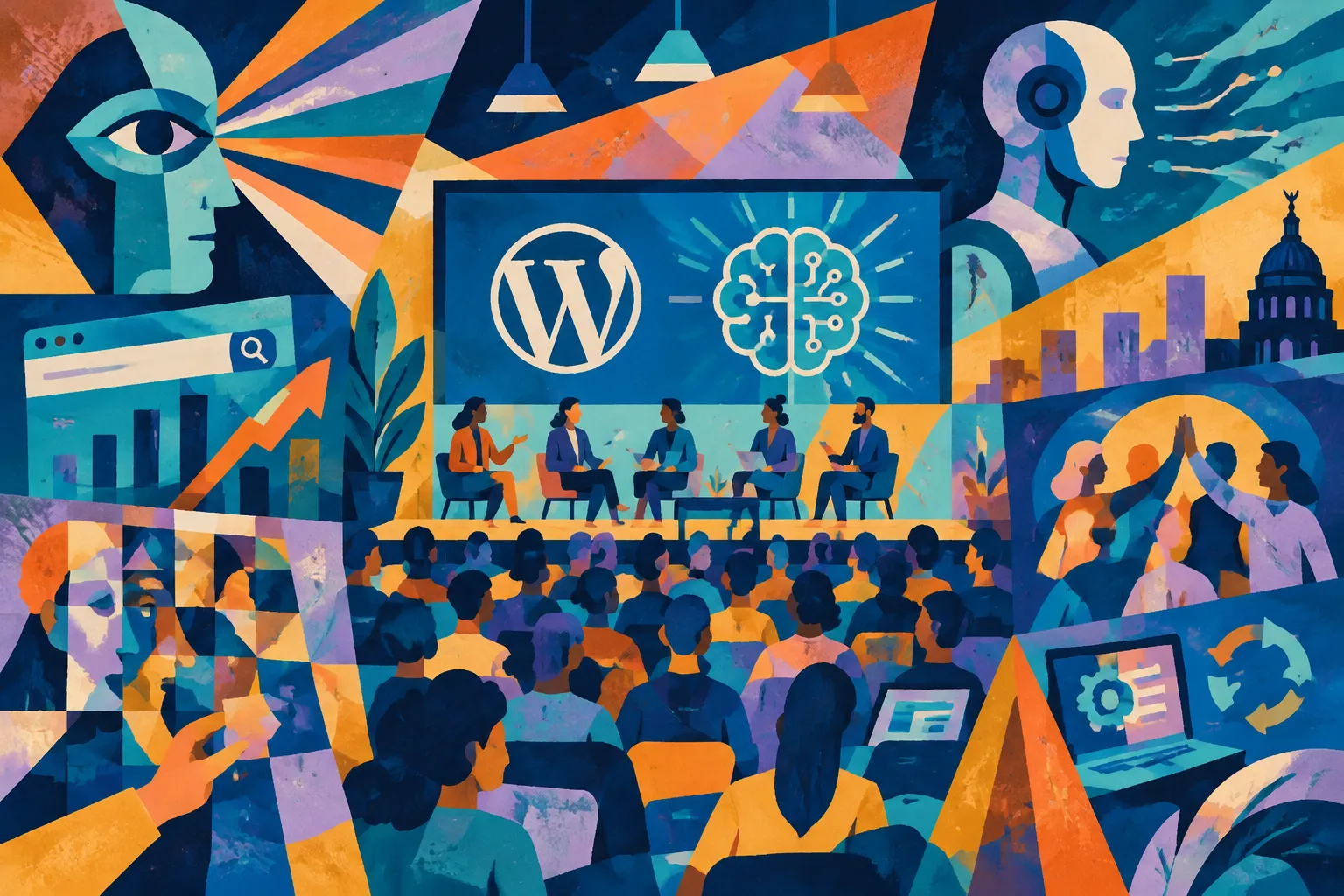
The second WP Agency Forum took place on 7 October 2026 at Talent Garden Madrid, drew 150 in-person attendees and over 200 online, and was organized by SiteGround España and Modular DS to focus on business strategy amid rapid AI-driven change in the sector.
The second WP Agency Forum took place on 7 October 2026 at Talent Garden Madrid, drew 150 in-person attendees and over 200 online, and was organized by SiteGround España and Modular DS to focus on business strategy amid rapid AI-driven change in the sector. Nine speakers addressed topics including AI and search positioning, new business models, team culture and the role of AI agents; Joan Boluda closed with a talk titled «Ya no uso WordPress», and organizers presented maintenance and AI-focused product updates.
At a three‑day INMA Newsroom and AI Master Class (20 October 2026), speakers described a shift in which newsrooms treat AI not only as a tool but as a means to redesign production, prioritise higher‑value journalism, and develop new revenue and audience strategies.
At a three‑day INMA Newsroom and AI Master Class (20 October 2026), speakers described a shift in which newsrooms treat AI not only as a tool but as a means to redesign production, prioritise higher‑value journalism, and develop new revenue and audience strategies.
At a 20 October 2026 INMA study tour stop at Salesforce Tower, Salesforce executives framed AI as a force for organisational coordination, outlined a four-layer agentic operating model, warned about costs of replacing CRM with general models, and demonstrated an agent-to-agent ad-sales pilot involving Nine and Dentsu that remains in pilot.
At a 20 October 2026 INMA study tour stop at Salesforce Tower, Salesforce executives framed AI as a force for organisational coordination, outlined a four-layer agentic operating model, warned about costs of replacing CRM with general models, and demonstrated an agent-to-agent ad-sales pilot involving Nine and Dentsu that remains in pilot.
Independent benchmarks show agents reliably complete short, well-specified tasks but fail as tasks grow longer, more interactive or underspecified; reported success rates include 30% (TheAgentCompany, September 2025), about 58% when all information is given vs 35% when information arrives piecemeal (Salesforce CRMArena-Pro, May 2025), and measured median successful-task horizons of roughly 50 minutes (March 2025) rising to about 2 hours 17 minutes for GPT-5 in later METR measures.
Independent benchmarks show agents reliably complete short, well-specified tasks but fail as tasks grow longer, more interactive or underspecified; reported success rates include 30% (TheAgentCompany, September 2025), about 58% when all information is given vs 35% when information arrives piecemeal (Salesforce CRMArena-Pro, May 2025), and measured median successful-task horizons of roughly 50 minutes (March 2025) rising to about 2 hours 17 minutes for GPT-5 in later METR measures. Industry signals echo these limits: Gartner forecasted on 25 June 2025 that over 40% of agent projects would be abandoned by end-2027 and warned of 'agent washing'; a Swiss barometer (survey June–September 2026) found 36% of firms using agents and widespread measurement gaps; operational anecdotes include Klarna's February 2024 claim it replaced 700 agents and May 2025 rehiring, and Anthropic's Project Vend (27 June 2025) ran a month-long office shop that lost money. IA Académie recommends treating autonomy in three degrees (prepare with human validation; act alone on low-impact tasks; act externally only after measured error rates), logging every action, limiting access, and measuring baseline indicators before rollout.
Facing abundant AI-generated content, major news organisations are emphasising human-crafted processes, visible journalists and editorial signals to persuade readers to subscribe.
Facing abundant AI-generated content, major news organisations are emphasising human-crafted processes, visible journalists and editorial signals to persuade readers to subscribe. Evidence includes new products and campaigns — The New York Times' Backstory, the Financial Times' “For The Why,” the Economist’s audio/video tier after 183 years without bylines, and the Irish Independent reserving 15 of 25 homepage slots for 'signature journalism' — plus survey and experiment data about trust.
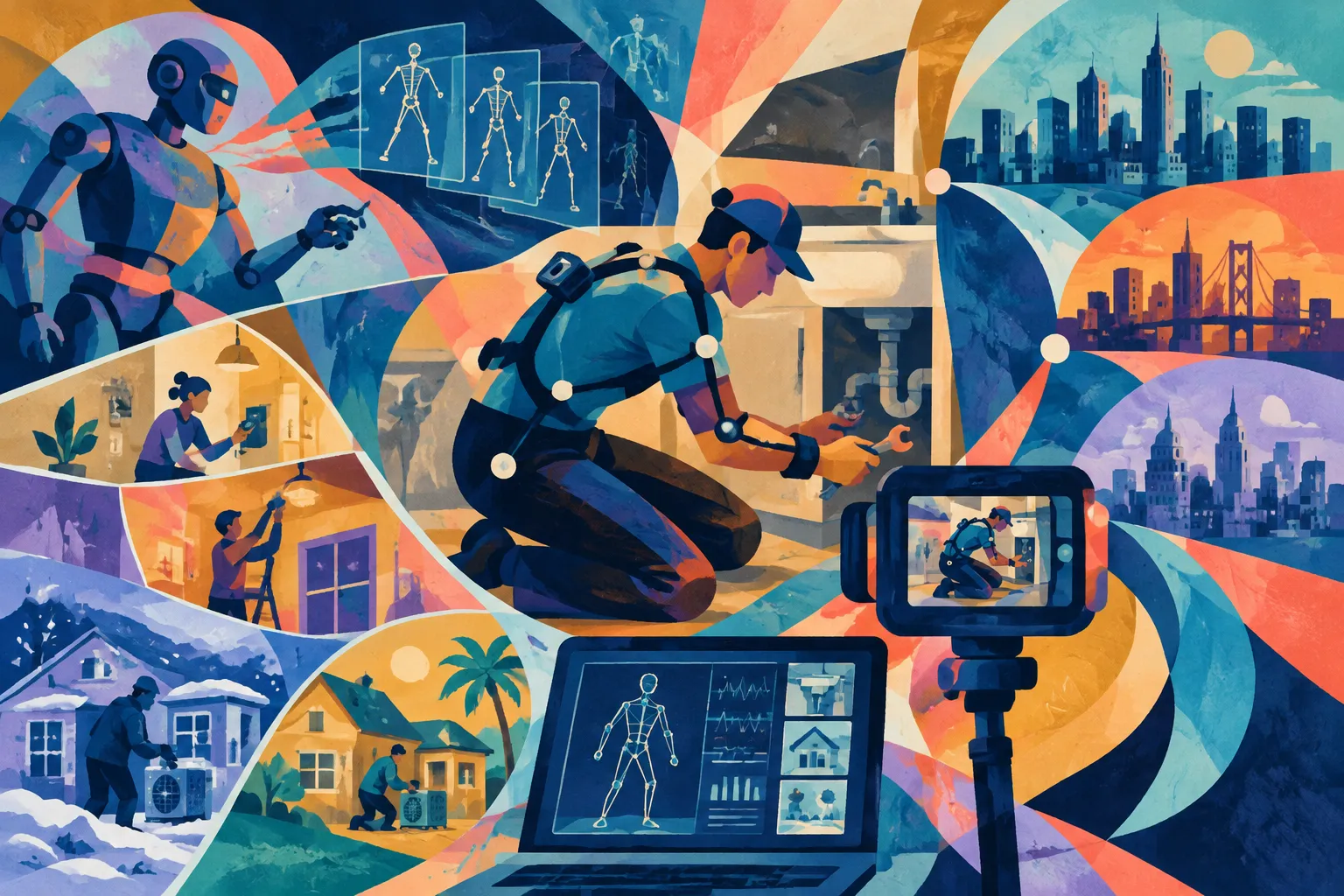
HUMXN is offering free plumbing, electrical, HVAC, air-duct and carpet cleaning in exchange for allowing workers to wear capture devices inside homes; the program will run in Minneapolis, Chicago and Miami, the company says.
HUMXN says it will pay for qualifying home services and record technicians using wearable capture technology to collect real‑world training data for AI robots; the lab announced pilot activity in three cities and framed the program as a way to capture technicians’ on-the-job decisions and movements across diverse homes and climates.
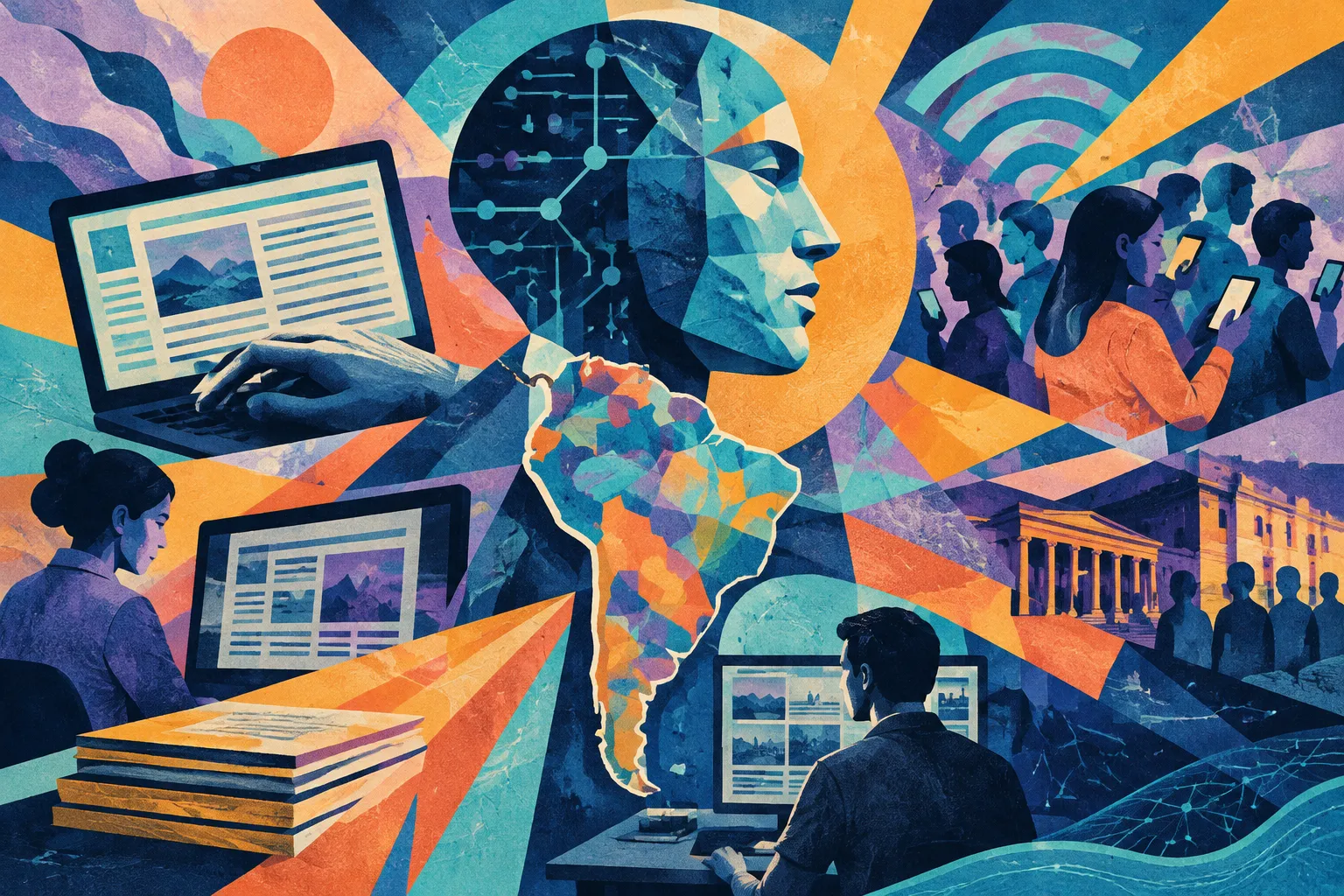
A study of 32 news organizations across 10 South American countries (2023–2025) finds generative AI moved from experimentation after the public launch of ChatGPT in late 2022 into an operational element of journalism, concentrated in audience mediation, production support and political-institutional roles.
A study of 32 news organizations across 10 South American countries (2023–2025) finds generative AI moved from experimentation after the public launch of ChatGPT in late 2022 into an operational element of journalism, concentrated in audience mediation, production support and political-institutional roles.